menu

Commercial Water Damage Restoration in Buffalo – Minimize Downtime and Protect Your Revenue Stream

Alpha Water Damage Restoration Buffalo delivers rapid commercial water mitigation that keeps your business operational, with industrial-grade extraction, certified structural drying protocols, and documented compliance reporting for insurance and liability protection.

Slider Image 1
Slider Image 2
Slider Image 3
Slider Image 4
Slider Image 5
Slider Image 7
Slider Image 8
Slider Image 9
Slider Image 10
Slider Image 11

Why Buffalo Commercial Properties Face Elevated Water Damage Risk

Buffalo's freeze-thaw cycles create constant stress on commercial building envelopes. When temperatures drop below freezing and climb back up repeatedly between November and April, pipe joints loosen, roof membranes crack, and foundation walls shift. This pattern accelerates water intrusion in multi-story buildings, warehouses, and office complexes.

The city's high annual snowfall, averaging over 95 inches, adds hydrostatic pressure against foundation walls during spring melt. Commercial properties in low-lying areas near the Buffalo River and Scajaquada Creek face additional groundwater infiltration risks. Older structures in the Central Business District often feature outdated plumbing systems with galvanized steel pipes prone to corrosion and rupture.

When water penetrates a commercial facility, the financial impact extends beyond repair costs. Every hour of closure represents lost revenue, employee displacement, and potential lease violations. Water migrates through HVAC systems, damages inventory, and compromises electrical infrastructure. Mold colonization begins within 24 to 48 hours, creating liability exposure and potential code violations under New York State Building Code Section 1203.

Business water damage restoration requires immediate action. Delay amplifies structural degradation, increases remediation scope, and extends operational downtime. Commercial water damage cleanup demands industrial capacity that residential equipment cannot provide. You need extraction pumps measured in hundreds of gallons per minute, commercial dehumidifiers rated for thousands of square feet, and technicians trained in multi-phase drying protocols.

Why Buffalo Commercial Properties Face Elevated Water Damage Risk
How Professional Commercial Water Mitigation Differs from Residential Service

How Professional Commercial Water Mitigation Differs from Residential Service

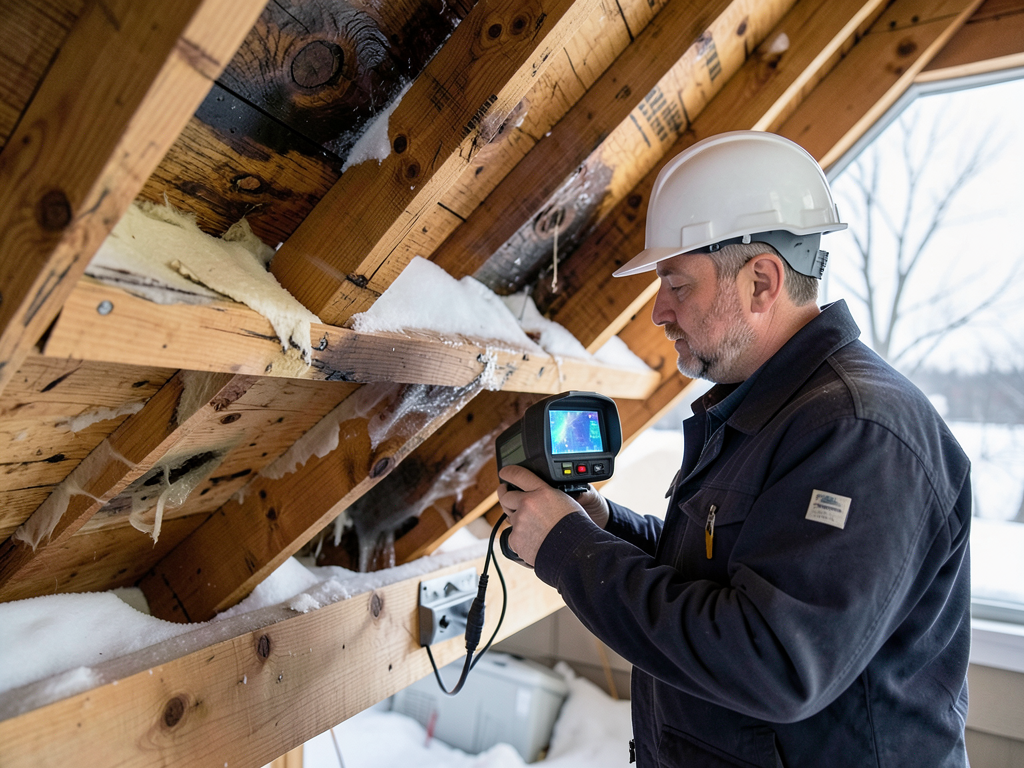
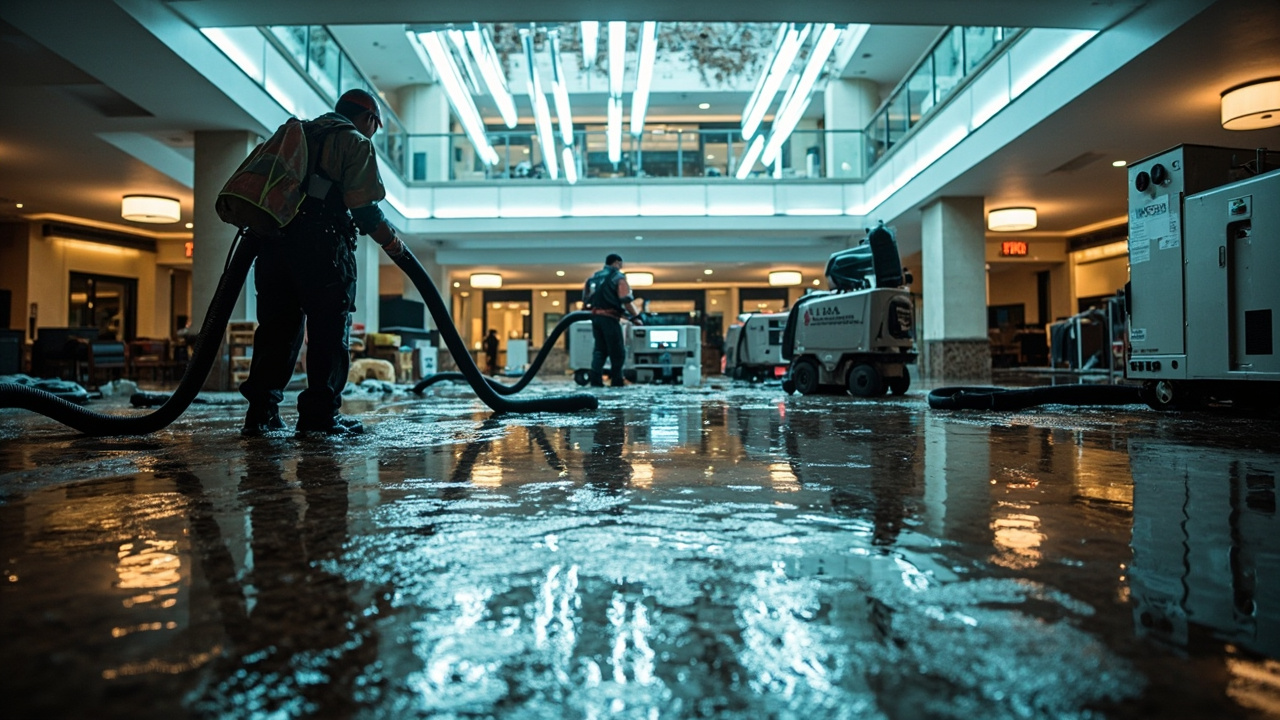
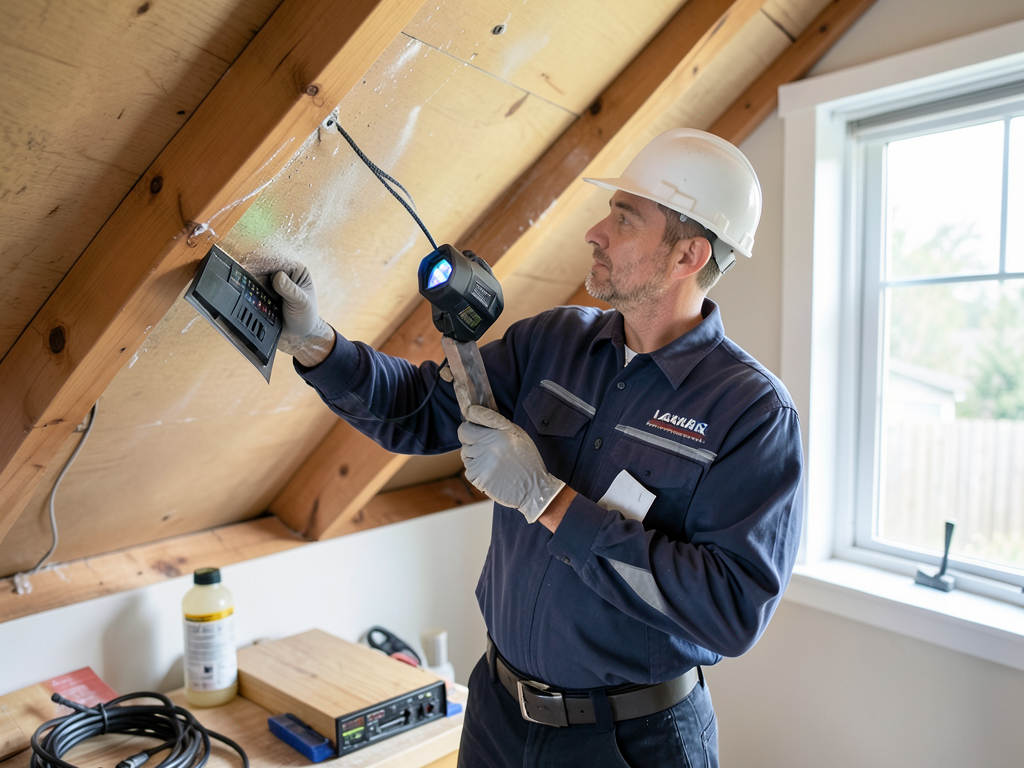
Commercial water damage repair requires capacity, not just capability. A burst pipe in a 50,000-square-foot warehouse demands truck-mounted extraction units, not portable shop vacuums. We deploy trailer-mounted desiccant dehumidifiers that process air volumes residential units cannot approach. Our thermal imaging cameras map moisture migration through concrete slab foundations and behind metal stud walls where visual inspection fails.

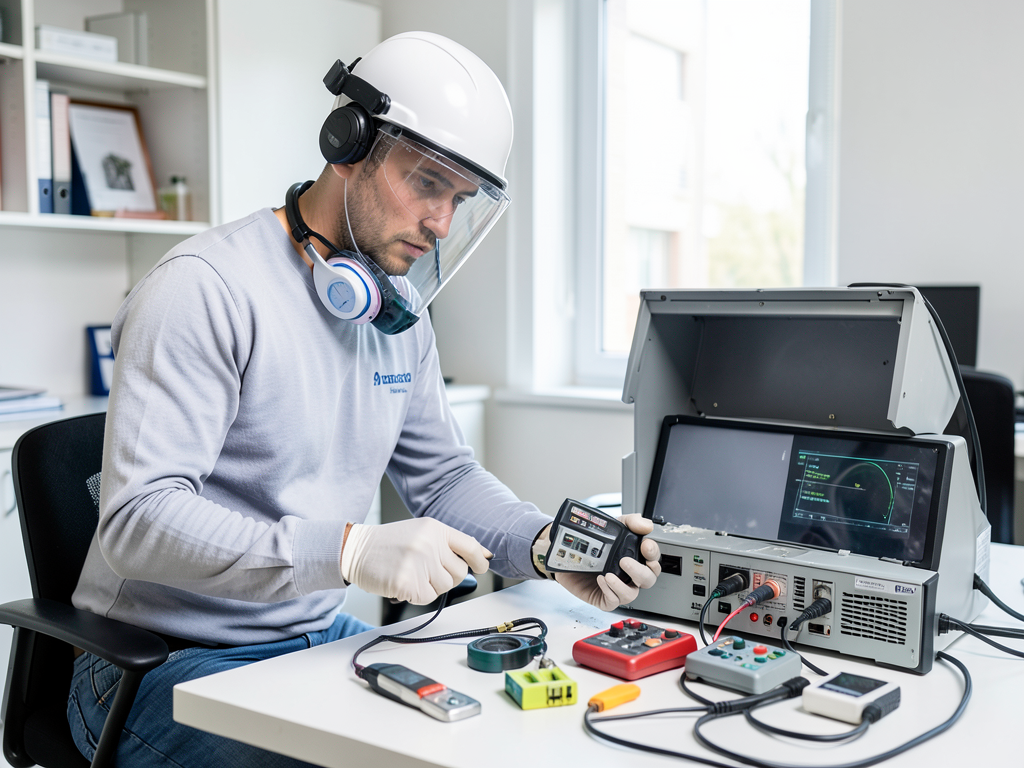
Documentation separates professional commercial water remediation from basic cleanup. We generate moisture mapping reports with psychrometric readings that insurance adjusters and building inspectors require. Our technicians record temperature, humidity, and moisture content readings at designated intervals, creating the evidence trail your claim demands. This documentation protects you from coverage disputes and establishes compliance with drying standards.

Structural drying in commercial facilities requires understanding building systems. We coordinate with your facility management to isolate affected HVAC zones, preventing cross-contamination through ductwork. Our team identifies which wall cavities require selective demolition versus air movement alone. We calculate grain depression and vapor pressure differentials to determine equipment placement and runtime requirements.

Business continuity drives our approach. We establish containment barriers using poly sheeting and negative air pressure to isolate damaged sections, allowing unaffected areas to remain operational. Our crews work second and third shifts to minimize disruption during business hours. We coordinate with your IT staff to protect server rooms and data centers, prioritizing areas that impact your revenue stream.

Alpha Water Damage Restoration Buffalo maintains equipment inventory to handle multiple commercial losses simultaneously without rental delays.

What Happens During a Commercial Water Emergency Response

Commercial Water Damage Restoration in Buffalo – Minimize Downtime and Protect Your Revenue Stream
01

Initial Assessment and Containment

Our project manager arrives within 90 minutes to evaluate loss scope, identify water source classification, and establish containment zones. We document pre-existing conditions, photograph affected areas, and create a moisture map using penetrating and non-penetrating meters. This assessment determines extraction strategy, equipment requirements, and provides your insurer with immediate loss notification documentation that accelerates claim processing and prevents coverage disputes.
02

Water Extraction and Structural Drying

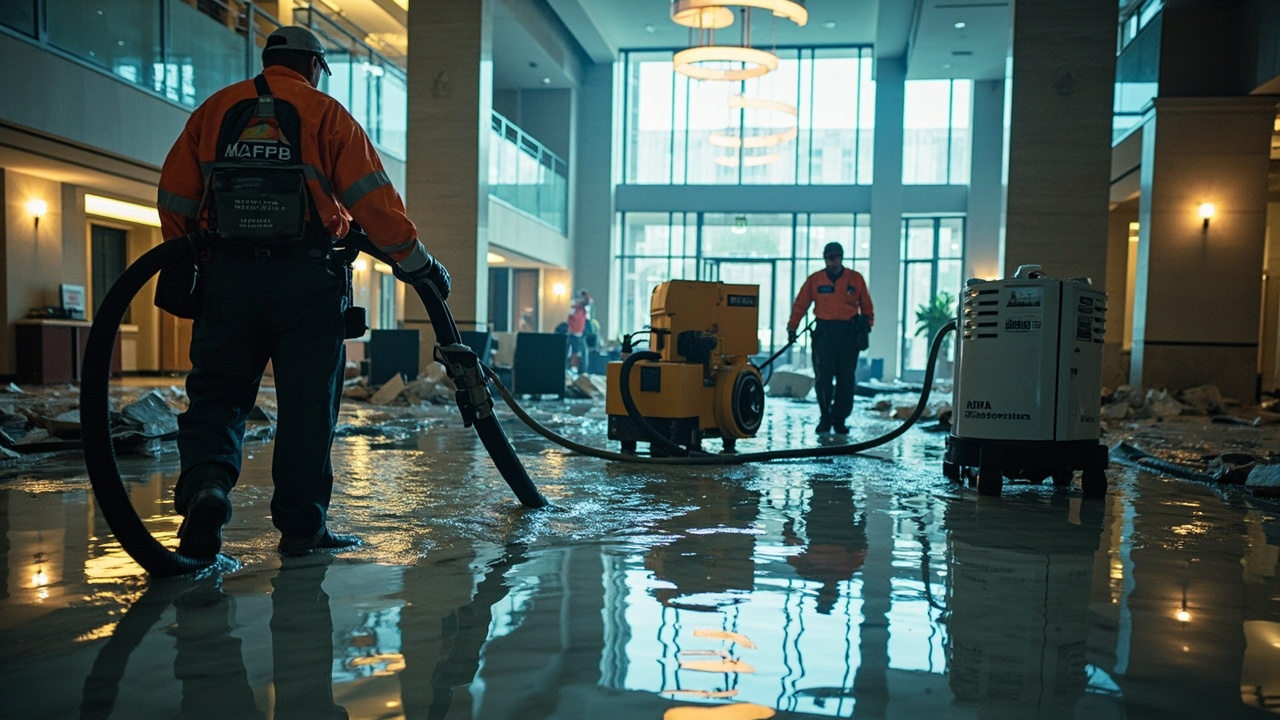
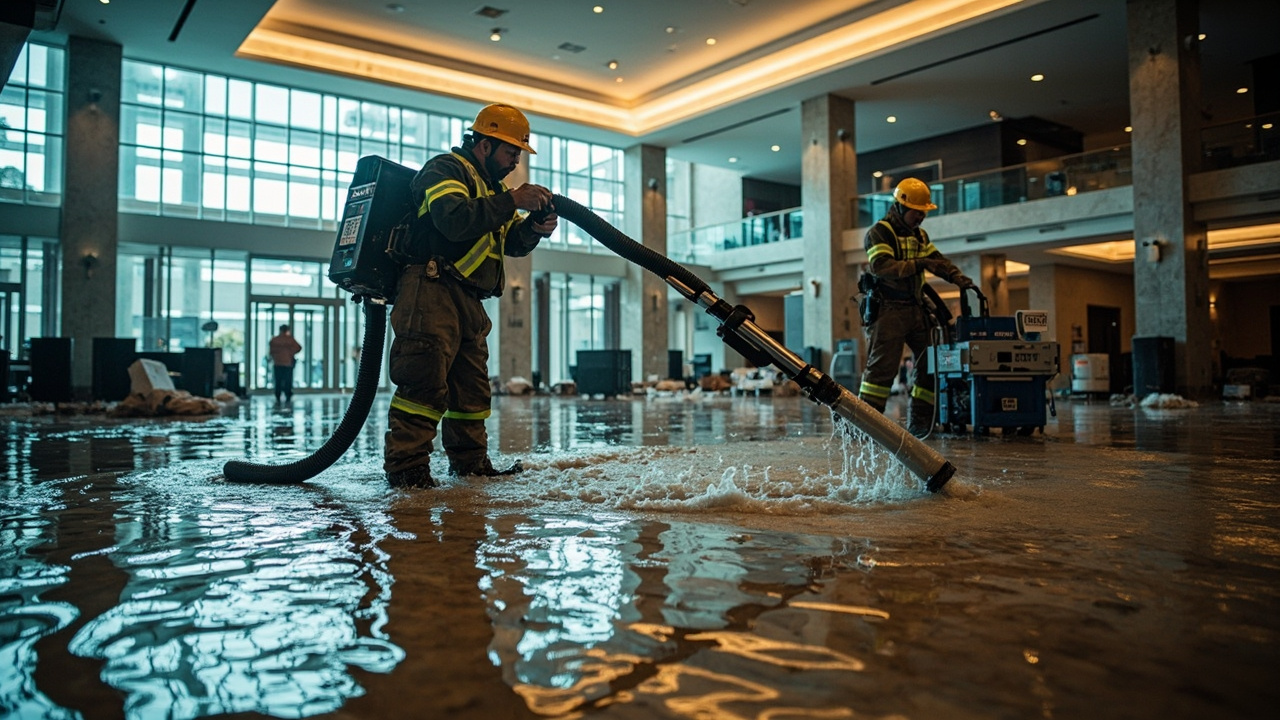
We deploy truck-mounted extraction units capable of removing thousands of gallons per hour, followed by placement of commercial air movers and dehumidifiers calibrated to your facility's cubic footage. Our technicians remove baseboards, drill weep holes in wall cavities where necessary, and position equipment to maximize evaporation rates. We monitor drying progress every 12 to 24 hours using moisture meters and thermal imaging, adjusting equipment placement based on psychrometric data until all materials reach dry standard.
03

Verification and Clearance Documentation

Once moisture readings stabilize at or below baseline levels for 48 hours, we conduct final verification testing and generate a completion report. This document includes all daily moisture logs, equipment placement diagrams, and certificate of drying that satisfies insurance requirements and building code compliance. We provide antimicrobial treatment documentation if mold remediation occurred, giving you the clearance records necessary to reoccupy the space and resume normal operations without liability exposure.

Why Buffalo Businesses Choose Local Commercial Water Damage Specialists

National franchise operations route your emergency call through distant call centers that dispatch the next available crew, regardless of commercial experience. We answer locally, respond from Buffalo, and maintain relationships with the adjusters and building inspectors who review your claim and certificate of occupancy.

Our technicians understand Buffalo's building stock. We have worked in the Ellicott Square Building, restored warehouses in the First Ward, and dried manufacturing facilities in South Buffalo. We know which structures have clay tile drainage systems that fail during freeze-thaw cycles and which downtown buildings have steam heating systems prone to condensate line failures. This familiarity eliminates diagnostic delays and prevents misapplied drying strategies that extend timelines.

We maintain working relationships with Buffalo's commercial insurance adjusters. When you file a claim, we provide the documentation format your specific carrier requires, eliminating the back-and-forth that delays approval. Our estimates align with Xactimate pricing databases that adjusters use, reducing disputes over scope and cost. This coordination accelerates payment and gets your restoration moving while competitors are still arguing over line items.

Building code compliance in New York State requires specific procedures for selective demolition, antimicrobial application, and disposal of category 2 and 3 water-damaged materials. We maintain current knowledge of Section 1203 moisture protection requirements and can coordinate inspections with the City of Buffalo Department of Permit and Inspection Services. This prevents the stop-work orders that occur when out-of-town contractors apply residential protocols to commercial projects.

Alpha Water Damage Restoration Buffalo operates with the capacity to handle enterprise-level losses without subcontracting critical phases to unknown third parties.

What to Expect When You Contact Us for Commercial Water Damage

Emergency Response Timeline

We dispatch a project manager to your Buffalo facility within 90 minutes of your call, 24 hours per day. Our initial response focuses on source control and damage containment. If the loss occurs after business hours or on weekends, we establish temporary containment and begin extraction immediately, then return during business hours to finalize scope and documentation. For Category 3 losses involving sewage or exterior flooding, we initiate safety protocols and coordinate with environmental health requirements before personnel entry. Time-sensitive situations involving active electrical systems or structural instability receive priority routing to prevent secondary damage and liability exposure.

Loss Assessment and Documentation Process

Our project manager conducts a room-by-room evaluation using moisture meters, thermal imaging, and visual inspection to determine affected square footage and materials. We classify water source as Category 1, 2, or 3 based on contamination level, which dictates handling procedures and disposal requirements. You receive a written scope of work within four hours that includes moisture mapping diagrams, equipment list, estimated timeline, and preliminary cost range. This assessment serves as your insurer notification and establishes baseline documentation for claim support. We photograph all affected areas and catalog damaged contents before any demolition or disposal occurs, protecting you from disputes over pre-loss condition.

Drying Standards and Completion Criteria

We dry structures to ANSI/IICRC S500 standards, which require affected materials to reach moisture content equal to or below unaffected areas of similar material. Concrete slabs must reach below 4.5 percent moisture content before floor covering installation. Wood framing must return to 6 to 12 percent depending on species and regional norms. We do not remove equipment based on timelines or visual appearance. Our technicians take daily readings and adjust dehumidification capacity until psychrometric calculations confirm equilibrium moisture content. You receive a certificate of completion with all daily logs, proving due diligence for insurance closure and future liability protection.

Post-Mitigation Support and Reconstruction Coordination

Once drying reaches completion, we provide referrals to licensed contractors for reconstruction if your policy requires separate bids. If you prefer single-source accountability, we coordinate rebuild phases including selective demolition, mold remediation if testing confirms growth, and restoration to pre-loss condition. Our project managers schedule work during off-hours when possible to minimize business disruption. We maintain communication with your facility management and insurance adjuster throughout reconstruction, providing progress updates and change order documentation. All work meets New York State Building Code requirements and includes final inspection coordination with City of Buffalo permit authorities where applicable. We archive all project documentation for seven years, giving you permanent records for lease compliance or future property transactions.

Frequently Asked Questions

You Have Questions,
We Have Answers

How much does a water restoration company charge? +

Commercial water restoration pricing depends on damage scope, square footage, and response time. Buffalo projects typically involve extraction, structural drying, dehumidification, and reconstruction. Category 1 water (clean source) costs less than Category 3 (sewage). Emergency response to a burst pipe in a downtown office differs from flood remediation in a warehouse district. Pricing factors include affected materials, equipment deployment, and business downtime mitigation. Most commercial restoration follows insurance protocols with detailed documentation for claims processing. Expect tiered pricing based on project phases rather than flat rates. Request itemized estimates that separate emergency services from reconstruction.

Does commercial property insurance cover water damage? +

Most commercial property policies cover sudden and accidental water damage. Burst pipes, HVAC failures, and roof leaks from storms typically qualify. Buffalo businesses face coverage for freeze-thaw damage during harsh winters. Policies exclude gradual damage from deferred maintenance or flooding (separate flood insurance required). Your coverage depends on policy type, deductible, and whether you maintain documented preventive maintenance records. Review your declarations page for water damage limits and exclusions. Many Buffalo commercial properties need endorsements for specific risks like sewer backup or equipment breakdown. Document all damage immediately with photos and timestamps for claims approval.

Is water damage restoration profitable? +

Water damage restoration profitability depends on operational efficiency, insurance relationships, and market demand. Buffalo's climate creates consistent need for freeze-related emergency services. Profit margins vary by service category. Emergency water extraction has different economics than full-scale reconstruction. High equipment costs, labor intensity, and insurance reimbursement timelines affect cash flow. Successful operators maintain certifications, invest in industrial equipment, and build adjuster relationships. The industry requires significant working capital to bridge payment gaps between service delivery and insurance settlements. Market saturation in commercial sectors means differentiation through response time and documentation quality drives sustainable profitability.

How much can water damage cost to repair? +

Commercial water damage repair costs range from minor extraction to complete building rehabilitation. A small office leak may require only drying and minor repairs. Large-scale incidents affecting Buffalo warehouses or multi-tenant buildings involve structural assessment, mold remediation, and code-compliant reconstruction. Category 3 water adds biohazard disposal costs. Square footage, material types, and business interruption mitigation drive total expense. Delayed response multiplies costs through secondary damage and mold growth. Insurance adjusters evaluate replacement cost versus actual cash value. Factor in permit requirements for commercial spaces and potential ADA compliance updates during reconstruction.

Does insurance pay for water restoration? +

Insurance typically pays for covered water restoration after deductible and policy limit verification. Commercial policies require prompt notification and damage mitigation. Buffalo businesses must document initial damage, mitigation efforts, and all communication with adjusters. Insurers pay for necessary restoration to pre-loss condition but exclude betterments or upgrades. Reimbursement follows approved estimates after inspection. Some policies advance emergency stabilization costs before final settlement. Denial occurs when damage results from maintenance neglect or excluded perils. Work with restoration contractors who understand commercial insurance protocols and provide adjuster-ready documentation. Payment timing depends on claim complexity and documentation quality.

Is water damage restoration worth it? +

Commercial water damage restoration protects asset value, prevents liability exposure, and maintains business operations. Unaddressed water damage in Buffalo buildings leads to structural deterioration, mold litigation, and tenant complaints. Professional restoration documents damage for insurance claims and establishes mitigation timeline to prevent coverage disputes. Speed reduces business interruption costs and preserves revenue streams. Proper drying prevents hidden moisture that causes long-term structural failure and indoor air quality problems. For commercial property owners, restoration costs are measurable. Liability from neglected water damage, lost tenants, and diminished property value far exceed professional remediation investment.

What is the 80% rule in property insurance? +

The 80% rule requires commercial properties to maintain insurance coverage equal to at least 80% of replacement cost to avoid coinsurance penalties. If your Buffalo warehouse is valued at $1 million replacement cost, you need $800,000 minimum coverage. Underinsurance triggers proportional payment reductions. A $100,000 water damage claim with only 60% coverage ratio results in partial payment after the formula applies. This rule protects insurers from properties carrying minimal coverage on appreciating assets. Commercial property owners must update coverage as construction costs rise. Buffalo's older commercial buildings often have replacement costs exceeding market value, making accurate appraisals critical.

What is not covered under commercial property insurance? +

Commercial property insurance excludes flood (requires separate NFIP or private flood policy), gradual damage from maintenance neglect, sewer backup without endorsement, and earth movement. Buffalo policies often exclude damage from frozen pipes if buildings lack adequate heating. Mold coverage has sub-limits or exclusions unless directly resulting from covered water damage. Mechanical breakdown needs separate equipment breakdown coverage. Policies exclude code upgrade costs unless you purchase ordinance or law endorsement. Water damage from ongoing leaks you knew about but ignored faces denial. Exterior groundwater seepage differs from sudden internal pipe failures. Review exclusions annually as Buffalo's freeze-thaw cycles create specific coverage gaps.

Why would insurance deny a water damage claim? +

Insurance denies water damage claims for maintenance-related failures, policy exclusions, late notification, and insufficient documentation. Buffalo commercial properties face denials when frozen pipes result from inadequate building heat or known plumbing defects. Gradual leaks without sudden triggering event get rejected. Flood damage without flood insurance is excluded. Insurers deny claims lacking proof of when damage occurred or evidence of mitigation efforts. Failure to document pre-existing conditions versus new damage creates disputes. Policies require immediate notification. Waiting weeks to report a pipe burst invites denial for unreported claims. Incomplete damage inventory or missing photos weaken claim validity.

Why is water damage so expensive? +

Water damage costs accumulate through emergency response, specialized equipment, labor intensity, and cascading secondary damage. Commercial restoration in Buffalo requires industrial dehumidifiers, air movers, moisture mapping, and antimicrobial treatment. Water migrates through building assemblies, affecting hidden areas that need invasive inspection. Structural drying takes days with continuous monitoring. Category 3 water adds hazmat disposal and extensive sanitization. Mold remediation requires containment and air filtration. Reconstruction costs include permit fees, code compliance updates, and business interruption accommodation. Material disposal, especially in older Buffalo commercial buildings with asbestos or lead paint, adds abatement requirements. Speed and thoroughness prevent exponentially higher costs from deferred damage.

How Buffalo's Lake Effect Snow Creates Year-Round Commercial Water Damage Exposure

Buffalo's proximity to Lake Erie generates extreme snow accumulation that stresses commercial roof systems beyond design load capacity. When rapid temperature swings follow heavy snowfall, ice dams form along roof edges and parapet walls, forcing meltwater under membrane roofing systems. This water penetrates roof decking, saturates insulation, and drips into ceiling plenums. Flat and low-slope commercial roofs common in Buffalo's industrial and retail buildings trap this water, creating pressure that exceeds waterproofing membrane tolerances. The cycle repeats throughout winter, causing progressive deterioration that manifests as interior water damage during spring thaw.

Commercial properties in Buffalo require water damage specialists who understand regional construction methods and seasonal stress patterns. Buildings constructed before 1980 often lack vapor barriers and insulation standards that current code requires, making them vulnerable to condensation and freeze damage. Our technicians recognize these construction variations and adjust drying strategies accordingly. We maintain relationships with Buffalo-area structural engineers and industrial hygienists for situations requiring third-party assessment. This local network ensures your project receives qualified professional input without delays from out-of-state consultants unfamiliar with Western New York building practices.
Water Damage Restoration Services in The Buffalo Area

Although we offer rapid mobile service across the entire Buffalo area and surrounding regions, we invite you to view our service area map to confirm our commitment to your community. We are always ready to deploy our expert teams directly to your residential or commercial property, ensuring the fastest possible response time when you need water damage restoration most, right where you are.

Address:
Alpha Water Damage Restoration Buffalo, 369 Washington St, Buffalo, NY, 14203

Additional Services We Offer

Our news updates

Latest Articles & News from The Blogs

The importance of microbial swabbing after a sewer backup in your Lackawanna basement When sewage backs up into your Lackawanna…

The importance of microbial swabbing after a sewer backup in your Lackawanna basement

The importance of microbial swabbing after a sewer backup in your Lackawanna basement When sewage backs up into your Lackawanna…

Simple ways to prevent your pipes from freezing in an unheated North Buffalo crawlspace

Simple ways to prevent your pipes from freezing in an unheated North Buffalo crawlspace Buffalo’s brutal winters and lake-effect snow…

Keeping your kids and pets safe during a home restoration project in Kenmore

Keeping your kids and pets safe during a home restoration project in Kenmore\n\nHome restoration after water damage creates unique safety…

Contact Us

Every hour of delay increases restoration costs and extends your closure period. Contact Alpha Water Damage Restoration Buffalo now at (716) 317-7717 for immediate commercial water mitigation response. Our project managers are available 24 hours per day to dispatch equipment and begin damage control.