
How to Tell if a Small Roof Leak is Actually a Major Mold Risk in Your Eden Home
Finding a small water stain on your ceiling might seem harmless but that minor roof leak could be feeding a serious mold problem hidden in your attic. In Eden’s cold climate with heavy snow loads and ice dam formation even tiny leaks trap moisture against insulation and wood creating the perfect environment for mold growth within 24 to 48 hours. This guide will show you how to identify the warning signs of hidden mold damage and when that small stain means you need professional help before it becomes a major health hazard. Repairing water damage from frozen pipes in Clarence.
Why Small Roof Leaks Create Big Mold Problems
Water follows the path of least resistance. A roof leak that starts as a pinhead-sized opening can allow gallons of water to enter your home over a single winter storm. In Eden’s climate the freeze-thaw cycle forces water deeper into cracks and crevices each time temperatures fluctuate. Once inside your attic that moisture gets trapped by insulation creating a microclimate where humidity levels stay above 60 percent constantly. This environment feeds mold colonies that can double in size every 24 to 48 hours according to EPA guidelines on indoor air quality. EPA Mold Resources.
Common attic mold species like Stachybotrys chartarum (black mold) and Aspergillus thrive on the cellulose in your attic insulation and the organic compounds in wood framing. The problem compounds because most homeowners never enter their attic regularly so mold can spread for months or years before anyone notices. By the time you see ceiling stains the colony has already established itself throughout your attic space.
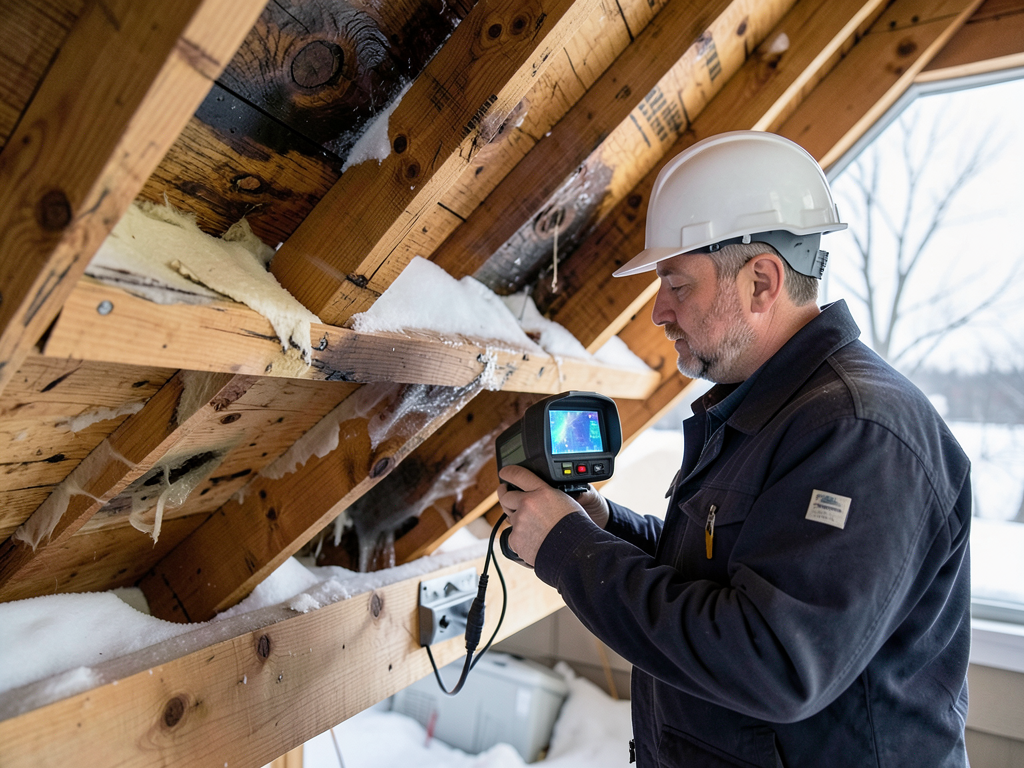
Thermal imaging scan showing hidden moisture patterns in attic rafters from a minor roof leak in a Lake Erie snow belt home
Ice Dams: Eden’s Primary Roof Leak Culprit
Eden sits in Erie County’s snow belt where annual snowfall averages 85 to 95 inches. This heavy snow combined with Lake Erie’s moisture creates ideal conditions for ice dam formation. Ice dams form when heat escaping from your attic melts snow on the roof surface. The melted water flows down to the colder eaves where it refreezes creating a barrier that traps additional meltwater. This backed-up water finds its way under shingles and into your attic through even the smallest gaps. Commercial water damage and drying experts in Downtown Buffalo.
Ice dam leaks are particularly dangerous because they’re often intermittent. You might only notice water during thaw cycles or heavy rain. The moisture evaporates between storms leaving no visible signs until mold colonies are well established. New York State building code requires ice and water shield installation in ice dam prone areas but many older Eden homes were built before these standards existed. Safe basement water removal services in Lancaster NY.
Hidden Danger Zones in Your Eden Home
Attic mold from minor leaks typically develops in these specific locations that most homeowners never inspect. The area around chimneys and roof penetrations represents the highest risk zone since flashing often fails before shingles do. In older Eden homes built before 1980 chimney flashing was often installed with tar rather than modern rubber boots which deteriorate within 15 to 20 years.. Read more about Why High Humidity in Your Lackawanna Attic is a Recipe for Structural Rot.
Another danger zone is the area where roof valleys meet exterior walls. These junctions create water collection points during heavy rain or melting snow. The water pressure can force moisture through nail holes or minor shingle damage that would never leak under normal conditions. Insulation pressed against these areas stays wet for extended periods creating ideal mold growth conditions.. Read more about How Heavy Snow Loads Can Damage Your Sunroom or Screened-in Porch in Boston NY.
Wall cavities adjacent to roof leaks often harbor hidden mold growth. Water travels along framing members and can enter walls through small gaps around electrical boxes or plumbing penetrations. Once inside walls the moisture gets trapped between drywall and insulation creating a perfect mold incubator that’s completely hidden from view.
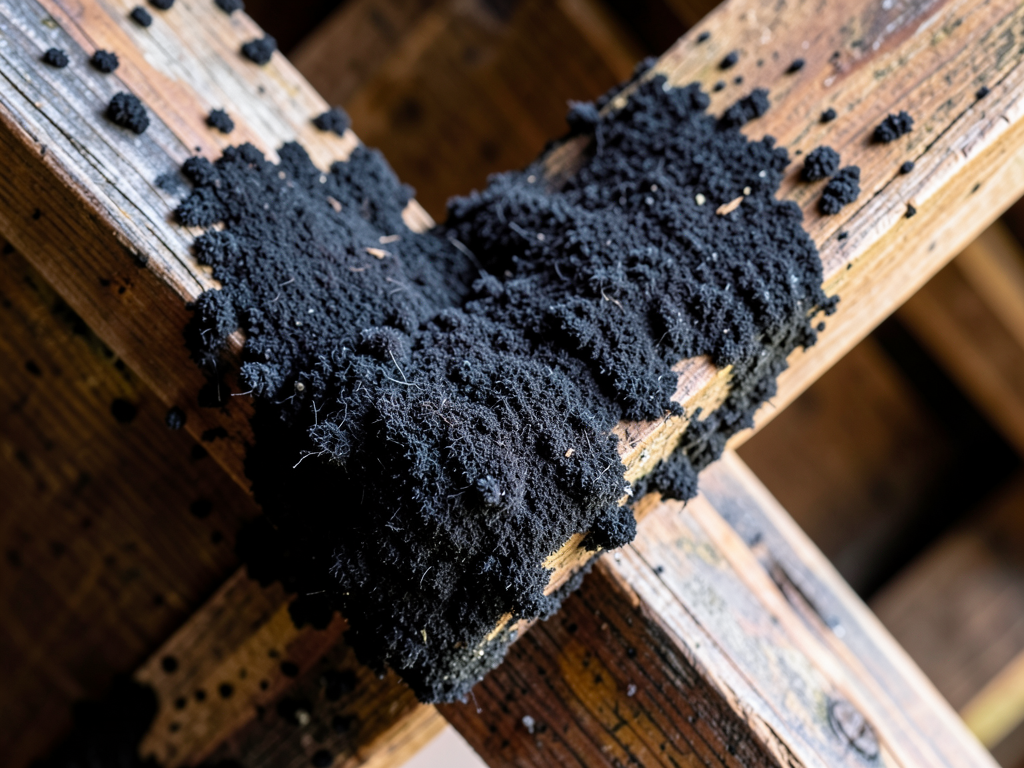
Close-up of black mold growth on attic rafters showing characteristic dark staining and fuzzy texture from chronic moisture exposure
Warning Signs Your Small Leak Has Become a Major Problem
Several indicators suggest your minor roof leak has evolved into a serious mold issue requiring immediate professional attention. Musty odors in your home especially noticeable after rain or when your HVAC system runs often indicate active mold colonies in your attic or walls. These odors come from microbial volatile organic compounds (MVOCs) that mold releases as it grows.
Visible ceiling stains that appear dark or have irregular borders typically indicate active moisture rather than old water damage. Fresh water stains often have a yellowish tint while older stains turn brown or gray. If you press on a stained area and it feels soft or spongy the underlying drywall has already absorbed significant moisture and likely harbors mold growth.
Condensation on windows or walls during cold weather can signal high indoor humidity from attic mold releasing spores into your living space. When mold colonies grow large enough they release thousands of spores that circulate through your home’s air system. This increased humidity condenses on cold surfaces creating a secondary moisture problem that accelerates mold growth throughout your home.. Read more about How to Stop Condensation from Forming in the Attics of Converted Lofts in the Hydraulics District.
Respiratory symptoms that improve when you leave your home for extended periods may indicate mold exposure. Common symptoms include persistent coughing, sinus congestion, itchy eyes, or unexplained fatigue. Children, elderly family members, and those with asthma or allergies often experience these symptoms first since they’re more sensitive to mold spore concentrations.
The 48-Hour Mold Growth Timeline
Understanding mold’s rapid growth timeline helps explain why even small leaks require prompt attention. Within the first 24 hours of moisture exposure mold spores that are naturally present in all homes begin to germinate. These spores need only organic material, oxygen, and moisture above 60 percent relative humidity to start growing.
Between 24 and 48 hours the first visible signs of mold may appear as fuzzy white or green patches on wet surfaces. By day three to five these colonies develop their characteristic colors and begin releasing spores into the air. The exponential growth continues with colonies doubling in size every 24 to 48 hours under optimal conditions.
After seven to ten days established mold colonies can produce enough spores to become visible to the naked eye from across a room. At this stage the mold has likely spread beyond the original moisture source to adjacent materials. Wood framing, drywall paper, and insulation all provide food sources that allow mold to expand its territory even if the original leak stops.
Professional mold remediation becomes necessary after 72 hours of continuous moisture exposure in most cases. At this point the mold has likely penetrated deep into porous materials making complete removal impossible without replacing affected building materials. The EPA recommends professional assessment for any mold growth covering more than 10 square feet or any growth in HVAC systems.. Read more about How to Dry Out a Wet Garage in Wheatfield Without Growing Mold.
Professional Mold Assessment Process
Professional mold assessment involves several diagnostic steps that go far beyond visual inspection. Certified mold inspectors use moisture meters to detect hidden water in building materials without destructive testing. These meters can identify moisture levels above 16 percent in wood and 20 percent in drywall which indicate active water intrusion.
Thermal imaging cameras detect temperature differences caused by moisture behind walls and in ceiling cavities. Wet materials conduct heat differently than dry materials creating thermal patterns that reveal hidden leaks. This technology allows inspectors to locate moisture sources without removing drywall or cutting into ceilings.
Air quality testing measures spore counts and identifies specific mold species present in your home. This testing establishes whether indoor spore levels exceed outdoor baseline counts which indicates active mold growth inside your home. Some mold species produce mycotoxins that pose serious health risks requiring specialized remediation procedures.
Surface sampling involves collecting physical samples from visible mold growth or suspect areas for laboratory analysis. This testing confirms mold species identification and determines whether the growth is currently active or represents old, dormant colonies. Active mold requires immediate remediation while dormant mold may only need cleaning and moisture control.
NYS Mold Regulations and Eden Homeowners
New York State Labor Law Article 32 regulates mold assessment and remediation in Eden and throughout Western New York. This law requires separate licensing for mold assessors and mold remediation contractors to prevent conflicts of interest. Assessors cannot perform remediation on properties they inspect, ensuring unbiased evaluation of mold problems.
Article 32 mandates specific work practices for mold remediation including containment barriers, negative air pressure, and HEPA filtration during removal operations. These requirements protect both workers and building occupants from exposure to mold spores during remediation. Licensed contractors must follow IICRC S520 standards for mold remediation which specify detailed procedures for different contamination levels.
Eden homeowners should verify contractor licensing through the New York State Department of Labor website before hiring mold remediation services. Unlicensed contractors may use improper techniques that spread contamination or fail to address underlying moisture problems causing the mold growth. Licensed contractors carry specific insurance coverage for mold work that unlicensed operators lack. How to Handle Insurance Claims.
Insurance coverage for mold damage varies significantly among policies. Most standard homeowner policies exclude mold damage unless it results from a covered peril like a sudden pipe burst. Gradual moisture problems from roof leaks typically fall under maintenance exclusions leaving homeowners responsible for remediation costs. Some insurers offer mold endorsements for additional premium that provide limited coverage.
Prevention Strategies for Eden’s Climate
Preventing ice dams and roof leaks starts with proper attic insulation and ventilation. Eden homes need at least R-49 insulation in attic floors according to current building codes. This insulation level prevents heat from your living space from warming your roof surface and creating melt conditions that lead to ice dams.
Attic ventilation requires one square foot of net free ventilation area for every 150 square feet of attic floor space. This ventilation should be split equally between soffit vents and ridge or gable vents to create continuous air flow that keeps attic temperatures close to outdoor temperatures. Without proper ventilation warm air pockets develop that melt snow unevenly across your roof.
Roof maintenance before winter includes cleaning gutters and downspouts to ensure proper drainage. Clogged gutters cause ice to back up under shingles at the roof edge where ice dams typically form. Installing heat cables in problem areas can prevent ice formation but these require electricity and regular maintenance to function properly.
Annual roof inspections by qualified professionals can identify potential leak sources before they cause water damage. Inspectors check flashing integrity, shingle condition, and sealant around penetrations. They also look for signs of previous water intrusion like rusted nails or water stains on roof sheathing that indicate chronic moisture problems.
When to Call a Professional Immediately
Certain situations require immediate professional intervention regardless of how minor the visible damage appears. Active water dripping from your ceiling or running down walls indicates an active leak that will cause extensive damage within hours. This situation requires emergency tarping and water extraction to prevent structural damage and mold growth.
Musty odors accompanied by visible water stains suggest active mold growth that’s already producing spores. The combination of moisture and odor indicates the mold colony is mature enough to release significant spore quantities into your home’s air. Professional remediation should begin within 24 to 48 hours to prevent further contamination.
Health symptoms affecting multiple family members that correlate with weather patterns often indicate mold exposure from roof leaks. When several people experience similar symptoms that worsen during rain or high humidity periods this pattern suggests indoor air quality problems from active mold growth. Medical evaluation combined with professional mold assessment becomes necessary in these cases.
Visible mold growth covering more than 10 square feet or appearing in multiple locations requires professional remediation according to EPA guidelines. At this scale DIY cleaning methods cannot address the extent of contamination and may actually spread spores to previously unaffected areas of your home.
DIY Assessment Steps for Concerned Homeowners
Homeowners can perform preliminary assessments to determine whether professional help is needed without risking exposure to potential mold contamination. Start with a careful visual inspection of your attic using a bright flashlight. Look for water stains on rafters, wet insulation, or visible mold growth which appears as dark spots or fuzzy patches on wood surfaces.
Check your attic during or immediately after rain to catch active leaks. Bring a moisture meter if you have one to test suspicious areas. Readings above 16 percent on wood or 20 percent on drywall indicate active moisture problems requiring attention. Document findings with photos to share with professionals if needed.
Examine your roof from ground level using binoculars to spot missing shingles, damaged flashing, or sagging areas that might indicate water damage. Pay special attention to chimney flashing, vent pipe boots, and areas where different roof planes meet. These locations fail most frequently and often cause the subtle leaks that lead to attic mold.
Test your home’s indoor air quality by noting any musty odors especially in closed rooms or after your HVAC system runs. Place a hygrometer in your living space to monitor relative humidity levels. Readings consistently above 60 percent suggest moisture problems that could support mold growth even without active leaks.
Inspect your basement or crawl space for signs of moisture that might indicate grading or drainage problems causing water to back up against your foundation. This water can find its way into your home through small cracks or gaps creating the moisture conditions that support mold growth in walls and floors.
Cost Factors for Professional Remediation
Professional mold remediation costs vary based on several factors that Eden homeowners should understand when budgeting for repairs. The extent of contamination represents the primary cost driver with small attic areas costing significantly less than whole-house remediation. Remediation costs typically range from $500 for minor spot cleaning to $15,000 or more for extensive structural mold removal.
Containment requirements increase costs substantially for larger contamination areas. Professional remediation requires sealing off affected areas with plastic sheeting and creating negative air pressure to prevent spore spread. This containment process requires specialized equipment and additional labor that smaller jobs don’t need.
Material replacement costs depend on what building materials require removal and disposal. Drywall, insulation, and carpet affected by mold must be removed rather than cleaned according to EPA guidelines. The cost of replacing these materials plus the labor to install them can equal or exceed the remediation costs themselves.
Insurance claim processing adds administrative costs that many homeowners don’t anticipate. Professional remediation companies often coordinate with insurance adjusters, provide documentation, and manage the claims process. While this service saves homeowners time and frustration it does add to the total project cost.
Insurance Considerations for Eden Homeowners
Understanding your insurance coverage before mold problems occur helps you make informed decisions about remediation options. Most standard homeowner policies in New York exclude mold damage unless it results from a covered peril like a burst pipe or wind damage to your roof. Gradual moisture intrusion from minor roof leaks typically falls under maintenance exclusions.
Some insurers offer mold endorsements as policy add-ons that provide limited coverage for mold remediation. These endorsements usually cap coverage at $10,000 to $25,000 and may exclude certain mold types or require professional inspection before coverage applies. Review your policy declarations page or contact your agent to understand your specific coverage limits.
Documentation becomes critical when filing mold damage claims. Take photos of water damage, keep receipts for any emergency repairs, and maintain records of all communications with your insurance company. Professional remediation companies can provide detailed documentation that insurance adjusters require to process claims efficiently.
Claim denials often occur when homeowners attempt DIY remediation before professional assessment. Insurance companies may deny claims if they determine the damage worsened due to improper handling or if the scope of damage becomes unclear due to homeowner intervention. Always consult your insurance company before beginning any remediation work.
Long-Term Solutions for Roof Leak Prevention
Addressing the root causes of roof leaks provides the most cost-effective long-term solution for Eden homeowners. Professional roof inspections every two to three years can identify potential failure points before they cause water damage. These inspections should include checking flashing integrity, shingle condition, and sealant around all roof penetrations.
Roof replacement timing depends on your current roofing material and local weather exposure. Asphalt shingles typically last 20 to 25 years in Western New York’s climate while metal roofing can last 40 to 50 years with proper maintenance. Replacing your roof before it fails prevents the water damage and mold growth that result from gradual deterioration.
Gutter maintenance prevents many roof leak problems by ensuring proper water drainage. Clean gutters at least twice yearly and after major storms to prevent ice buildup and water overflow that can damage roof edges and fascia boards. Consider installing gutter guards to reduce maintenance requirements while improving drainage efficiency.
Landscaping modifications can reduce moisture problems around your foundation that contribute to basement leaks and subsequent mold growth. Grade soil away from your foundation at a minimum slope of 6 inches over 10 feet to prevent water accumulation near your home’s structure. Extend downspouts at least 6 feet from your foundation to direct roof runoff away from your home.
Humidity control inside your home reduces the conditions that allow mold to thrive even when moisture sources are minor. Use dehumidifiers in basements and crawl spaces to maintain relative humidity below 50 percent. Install bathroom and kitchen exhaust fans that vent directly outdoors rather than into attic spaces where moisture can accumulate.
Choosing the Right Professional for Your Eden Home
Selecting qualified professionals for mold assessment and remediation protects your investment and ensures proper resolution of moisture problems. Look for contractors licensed by the New York State Department of Labor for both mold assessment and remediation work. Verify their credentials through the state licensing website before hiring any company.
Experience with Western New York’s specific climate challenges matters significantly when choosing mold remediation professionals. Contractors familiar with ice dam formation, Lake Erie snow loads, and local building practices understand the unique moisture problems Eden homes face. Ask potential contractors about their experience with similar homes in your area. Choosing a Restoration Company.
References from local homeowners provide valuable insight into contractor reliability and work quality. Request references from customers with similar mold problems and contact them to discuss their experiences. Online reviews can supplement but not replace direct references from homeowners who’ve dealt with similar issues.
Detailed written estimates protect you from unexpected costs and ensure all parties understand the scope of work. Professional estimates should include the assessment findings, remediation plan, timeline, and total cost including any necessary material replacement. Avoid contractors who provide verbal estimates or refuse to put terms in writing.
Insurance coordination experience becomes valuable when dealing with covered losses or complex claims situations. Contractors who regularly work with insurance companies understand documentation requirements and can help navigate the claims process. This experience often results in faster claim resolution and better outcomes for homeowners.
Post-remediation verification ensures your mold problem has been completely resolved. Professional remediation should include clearance testing by an independent third party to confirm that spore levels have returned to normal and that all moisture sources have been addressed. This verification provides documentation for insurance purposes and peace of mind for homeowners.
Frequently Asked Questions
How can I tell if my small roof leak has caused mold growth?
Look for musty odors, dark ceiling stains with irregular borders, soft or spongy drywall when pressed, and increased allergy symptoms among family members. These signs often indicate active mold growth even when no visible mold is present. Professional moisture testing can confirm hidden mold problems.
How long does it take for mold to grow after a roof leak?
Mold can begin growing within 24 to 48 hours of moisture exposure according to EPA guidelines. Under optimal conditions with temperatures between 70-90°F and humidity above 60%, mold colonies can double in size every 24 to 48 hours. This rapid growth is why prompt leak repair is essential.
Is mold from a minor roof leak dangerous to my health?
Yes, mold from even minor leaks can pose health risks especially to children, elderly individuals, and those with respiratory conditions or allergies. Some mold species produce mycotoxins that can cause serious health effects. The severity depends on the mold species, exposure duration, and individual sensitivity.
Can I clean up mold from a small roof leak myself?
The EPA recommends professional remediation for any mold growth covering more than 10 square feet or any growth in HVAC systems. DIY cleaning of larger areas often spreads contamination and may not address underlying moisture problems causing the mold growth. Small isolated spots might be cleaned with proper safety equipment.
How much does professional mold remediation cost in Eden?
Costs vary based on contamination extent but typically range from $500 for minor spot cleaning to $15,000 or more for extensive structural remediation. Factors affecting cost include containment requirements, material replacement needs, and the complexity of addressing underlying moisture sources.
Will my homeowner’s insurance cover mold damage from a roof leak?
Most standard policies exclude mold damage unless it results from a covered peril like a sudden pipe burst or wind damage. Gradual moisture intrusion from minor leaks typically falls under maintenance exclusions. Some insurers offer mold endorsements for additional premium that provide limited coverage.
How can I prevent ice dams that cause roof leaks in Eden?
Prevent ice dams by ensuring proper attic insulation (minimum R-49), adequate ventilation (1 square foot per 150 square feet of attic space), and sealing air leaks from your living space into the attic. Clean gutters regularly and consider heat cables in problem areas. Professional roof inspections can identify vulnerabilities.
What should I do immediately if I discover an active roof leak?
Place buckets under active drips to catch water, move furniture and valuables away from affected areas, and contact a professional immediately. For active leaks during business hours, call (716) 317-7717 for emergency response. Document damage with photos for insurance purposes before beginning any cleanup.
- Visual Inspection
Check your attic for water stains, wet insulation, or visible mold growth. Look around chimneys, roof penetrations, and valleys where leaks commonly occur.
- Moisture Testing
Use a moisture meter to test suspicious areas. Readings above 16% in wood or 20% in drywall indicate active moisture problems requiring attention.
- Odor Assessment
Notice any musty or earthy odors especially after rain or when your HVAC system runs. These odors often indicate active mold growth.
- Health Symptom Evaluation
Consider whether family members experience allergy-like symptoms that improve when away from home, which may indicate mold exposure.
- Professional Assessment
Contact a licensed mold assessor if you observe any warning signs or have concerns about potential hidden mold growth.
Don’t let that small water stain become a major mold problem. The humid summers and heavy snow loads in Eden create perfect conditions for hidden mold growth from even minor roof leaks. If you’re seeing warning signs or just want peace of mind, call (716) 317-7717 today to schedule your professional inspection. Our certified technicians will identify moisture sources, assess for hidden mold, and provide clear recommendations for protecting your home and family’s health. Pick up the phone and call (716) 317-7717 before the next storm hits. For more information, visit NYS Mold Licensing Information.
{
“@context”: “https://schema.org”,
“@type”: “BlogPosting”,
“headline”: “How to Tell if a Small Roof Leak is Actually a Major Mold Risk in Your Eden Home”,
“description”: “Learn to spot hidden mold risks from minor roof leaks in Eden NY. Our expert guide covers attic moisture, ice dams, and Buffalo-specific warning signs. Call (716) 317-7717.”,
“wordCount”: 3898,
“datePublished”: “2026-06-10T06:39:00.000Z”,
“dateModified”: “2026-06-10T06:39:00.000Z”,
“inLanguage”: “en-US”,
“mainEntityOfPage”: {
“@type”: “WebPage”,
“@id”: “https://alphawaterdamagerestorationbuffalo.com”
},
“publisher”: {
“@type”: “LocalBusiness”,
“name”: “Alpha Water Damage Restoration Buffalo”,
“url”: “https://alphawaterdamagerestorationbuffalo.com”
},
“author”: {
“@type”: “Organization”,
“name”: “Alpha Water Damage Restoration Buffalo”,
“url”: “https://alphawaterdamagerestorationbuffalo.com”
},
“image”: {
“@type”: “ImageObject”,
“url”: “https://alphawaterdamagerestorationbuffalo.com/wp-content/uploads/2026/03/how-to-tell-if-a-small-roof-leak-is-actually-a-maj-1.png”
}
}
{
“@context”: “https://schema.org”,
“@type”: “LocalBusiness”,
“name”: “Alpha Water Damage Restoration Buffalo”,
“url”: “https://alphawaterdamagerestorationbuffalo.com”,
“address”: {
“@type”: “PostalAddress”,
“addressLocality”: “Buffalo”
},
“areaServed”: {
“@type”: “City”,
“name”: “Buffalo”
}
}
{
“@context”: “https://schema.org”,
“@type”: “FAQPage”,
“mainEntity”: [
{
“@type”: “Question”,
“name”: “How can I tell if my small roof leak has caused mold growth?”,
“acceptedAnswer”: {
“@type”: “Answer”,
“text”: “Look for musty odors, dark ceiling stains with irregular borders, soft or spongy drywall when pressed, and increased allergy symptoms among family members. These signs often indicate active mold growth even when no visible mold is present. Professional moisture testing can confirm hidden mold problems.”
}
},
{
“@type”: “Question”,
“name”: “How long does it take for mold to grow after a roof leak?”,
“acceptedAnswer”: {
“@type”: “Answer”,
“text”: “Mold can begin growing within 24 to 48 hours of moisture exposure according to EPA guidelines. Under optimal conditions with temperatures between 70-90°F and humidity above 60%, mold colonies can double in size every 24 to 48 hours. This rapid growth is why prompt leak repair is essential.”
}
},
{
“@type”: “Question”,
“name”: “Is mold from a minor roof leak dangerous to my health?”,
“acceptedAnswer”: {
“@type”: “Answer”,
“text”: “Yes, mold from even minor leaks can pose health risks especially to children, elderly individuals, and those with respiratory conditions or allergies. Some mold species produce mycotoxins that can cause serious health effects. The severity depends on the mold species, exposure duration, and individual sensitivity.”
}
},
{
“@type”: “Question”,
“name”: “Can I clean up mold from a small roof leak myself?”,
“acceptedAnswer”: {
“@type”: “Answer”,
“text”: “The EPA recommends professional remediation for any mold growth covering more than 10 square feet or any growth in HVAC systems. DIY cleaning of larger areas often spreads contamination and may not address underlying moisture problems causing the mold growth. Small isolated spots might be cleaned with proper safety equipment.”
}
},
{
“@type”: “Question”,
“name”: “How much does professional mold remediation cost in Eden?”,
“acceptedAnswer”: {
“@type”: “Answer”,
“text”: “Costs vary based on contamination extent but typically range from $500 for minor spot cleaning to $15,000 or more for extensive structural remediation. Factors affecting cost include containment requirements, material replacement needs, and the complexity of addressing underlying moisture sources.”
}
},
{
“@type”: “Question”,
“name”: “Will my homeowner’s insurance cover mold damage from a roof leak?”,
“acceptedAnswer”: {
“@type”: “Answer”,
“text”: “Most standard policies exclude mold damage unless it results from a covered peril like a sudden pipe burst or wind damage. Gradual moisture intrusion from minor leaks typically falls under maintenance exclusions. Some insurers offer mold endorsements for additional premium that provide limited coverage.”
}
},
{
“@type”: “Question”,
“name”: “How can I prevent ice dams that cause roof leaks in Eden?”,
“acceptedAnswer”: {
“@type”: “Answer”,
“text”: “Prevent ice dams by ensuring proper attic insulation (minimum R-49), adequate ventilation (1 square foot per 150 square feet of attic space), and sealing air leaks from your living space into the attic. Clean gutters regularly and consider heat cables in problem areas. Professional roof inspections can identify vulnerabilities.”
}
},
{
“@type”: “Question”,
“name”: “What should I do immediately if I discover an active roof leak?”,
“acceptedAnswer”: {
“@type”: “Answer”,
“text”: “Place buckets under active drips to catch water, move furniture and valuables away from affected areas, and contact a professional immediately. For active leaks during business hours, call (716) 317-7717 for emergency response. Document damage with photos for insurance purposes before beginning any cleanup.”
}
}
]
}
{
“@context”: “https://schema.org”,
“@type”: “HowTo”,
“name”: “How to Assess a Minor Roof Leak for Mold Risk”,
“step”: [
{
“@type”: “HowToStep”,
“position”: 1,
“name”: “Visual Inspection”,
“text”: “Check your attic for water stains, wet insulation, or visible mold growth. Look around chimneys, roof penetrations, and valleys where leaks commonly occur.”
},
{
“@type”: “HowToStep”,
“position”: 2,
“name”: “Moisture Testing”,
“text”: “Use a moisture meter to test suspicious areas. Readings above 16% in wood or 20% in drywall indicate active moisture problems requiring attention.”
},
{
“@type”: “HowToStep”,
“position”: 3,
“name”: “Odor Assessment”,
“text”: “Notice any musty or earthy odors especially after rain or when your HVAC system runs. These odors often indicate active mold growth.”
},
{
“@type”: “HowToStep”,
“position”: 4,
“name”: “Health Symptom Evaluation”,
“text”: “Consider whether family members experience allergy-like symptoms that improve when away from home, which may indicate mold exposure.”
},
{
“@type”: “HowToStep”,
“position”: 5,
“name”: “Professional Assessment”,
“text”: “Contact a licensed mold assessor if you observe any warning signs or have concerns about potential hidden mold growth.”
}
],
“image”: “https://alphawaterdamagerestorationbuffalo.com/wp-content/uploads/2026/03/how-to-tell-if-a-small-roof-leak-is-actually-a-maj-1.png”
}
{
“@context”: “https://schema.org”,
“@type”: “BreadcrumbList”,
“itemListElement”: [
{
“@type”: “ListItem”,
“position”: 1,
“name”: “Home”,
“item”: “https://alphawaterdamagerestorationbuffalo.com”
},
{
“@type”: “ListItem”,
“position”: 2,
“name”: “Blog”,
“item”: “https://alphawaterdamagerestorationbuffalo.com/blog”
},
{
“@type”: “ListItem”,
“position”: 3,
“name”: “How to Tell if a Small Roof Leak is Actually a Major Mold Risk in Your Eden Home”
}
]
}
{
“@context”: “https://schema.org”,
“@type”: “Service”,
“serviceType”: “Water Damage Restoration”,
“provider”: {
“@type”: “LocalBusiness”,
“name”: “Alpha Water Damage Restoration Buffalo”,
“url”: “https://alphawaterdamagerestorationbuffalo.com”
},
“areaServed”: {
“@type”: “City”,
“name”: “Buffalo”
},
“description”: “Learn to spot hidden mold risks from minor roof leaks in Eden NY. Our expert guide covers attic moisture, ice dams, and Buffalo-specific warning signs. Call (716) 317-7717.”
}