
How to Dry Out a Wet Garage in Wheatfield Without Growing Mold
A flooded garage in Wheatfield creates more than just a mess. Standing water combined with Western New York’s high humidity creates perfect conditions for mold growth within 24-48 hours. The key to preventing mold is removing moisture quickly using the right equipment and techniques specific to Buffalo’s climate challenges. Repairing water damage from frozen pipes in Clarence.
Most homeowners grab household fans and think they’ve solved the problem. They haven’t. Standard fans only move surface air and leave moisture trapped in concrete, wood studs, and drywall. This trapped moisture becomes a breeding ground for mold spores that can spread throughout your home.
The solution requires understanding Buffalo’s unique environmental factors. Our spring thaw brings rapid snowmelt that overwhelms drainage systems. Summer humidity hovers around 70-80%. These conditions demand professional-grade equipment and specific drying protocols that go beyond what’s available at hardware stores.
Step 1: Safety Assessment Before You Touch Anything
Before entering a flooded garage, you need to assess three critical hazards that are especially dangerous in older Wheatfield homes near the Erie Canal.
First check for electrical hazards. Many Wheatfield garages built before 2000 have electrical panels mounted on interior walls. Floodwater can energize the entire space. Look for water around outlets, light fixtures, or the main breaker box. If you see any water near electrical components, call a professional immediately. Commercial water damage and drying experts in Downtown Buffalo.
Second identify the water source. Clean water from a burst pipe requires different handling than Category 3 water from street flooding or sewer backup. Buffalo’s combined sewer systems in older neighborhoods can back up during heavy rain, introducing bacteria and contaminants that require specific safety protocols. Safe basement water removal services in Lancaster NY.
Third check for structural damage. Garage floors in Wheatfield often sit on clay soil that expands when saturated. This can cause concrete to crack or shift. Look for visible cracks, doors that won’t close properly, or walls that appear bowed.
Wear rubber boots, gloves, and eye protection. If you smell gas or see bubbles forming in standing water, evacuate immediately and call the gas company.
Step 2: Water Removal Using Professional Equipment
Household wet vacuums work for small spills but fail on garage-scale flooding. You need a submersible pump or a truck-mounted extraction system to remove standing water efficiently.
For water deeper than one inch, use a submersible pump. These pumps can move 1,500-3,000 gallons per hour compared to a wet vac’s 5-10 gallons per minute. Place the pump at the lowest point and direct the discharge away from your foundation.
After removing standing water, extract moisture from porous materials. Concrete garage floors absorb water like a sponge. Use a professional-grade carpet extractor or a weighted water claw to pull moisture from the concrete surface.
Don’t forget to check hidden areas. Water flows to the lowest points and can collect behind stored items, under workbenches, or in tool cabinets. Move everything to access all surfaces.
Document everything before you start cleaning. Take photos of the water level, damaged items, and structural conditions. This documentation helps with insurance claims and establishes the extent of damage. How to Handle Insurance Claims.
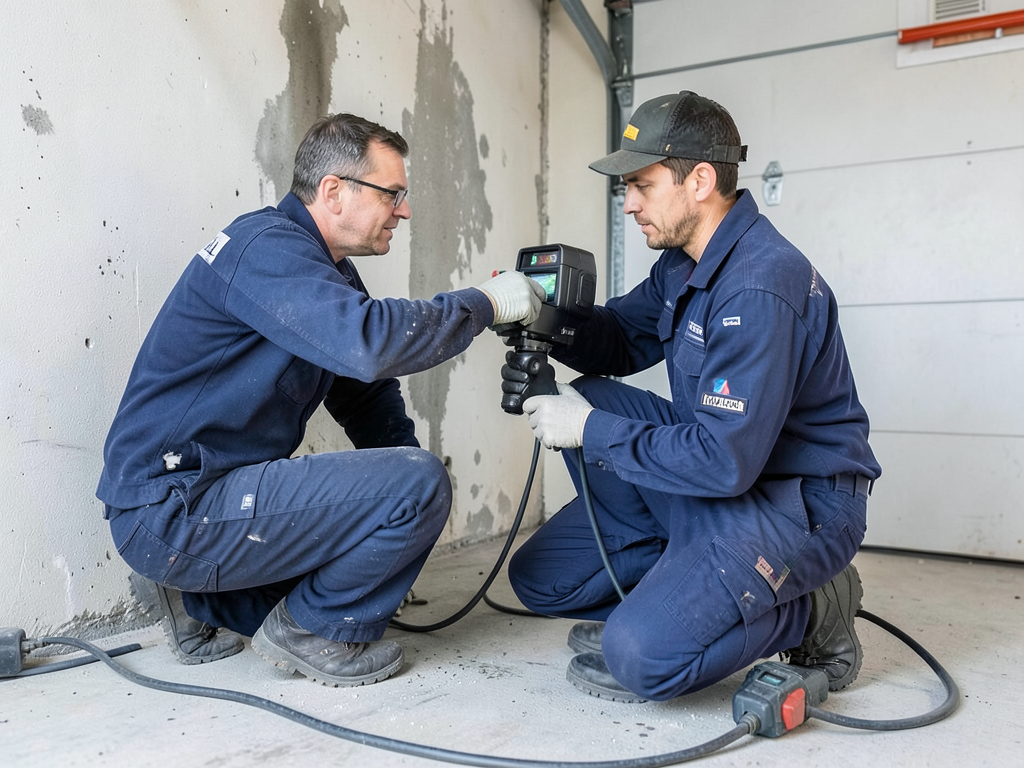
Step 3: Professional Drying Equipment That Actually Works
Standard box fans create about 1,500 cubic feet per minute of airflow. Professional axial air movers generate 3,000-5,000 CFM and direct air precisely where needed. This difference matters because proper airflow breaks the boundary layer of moisture that forms on wet surfaces.
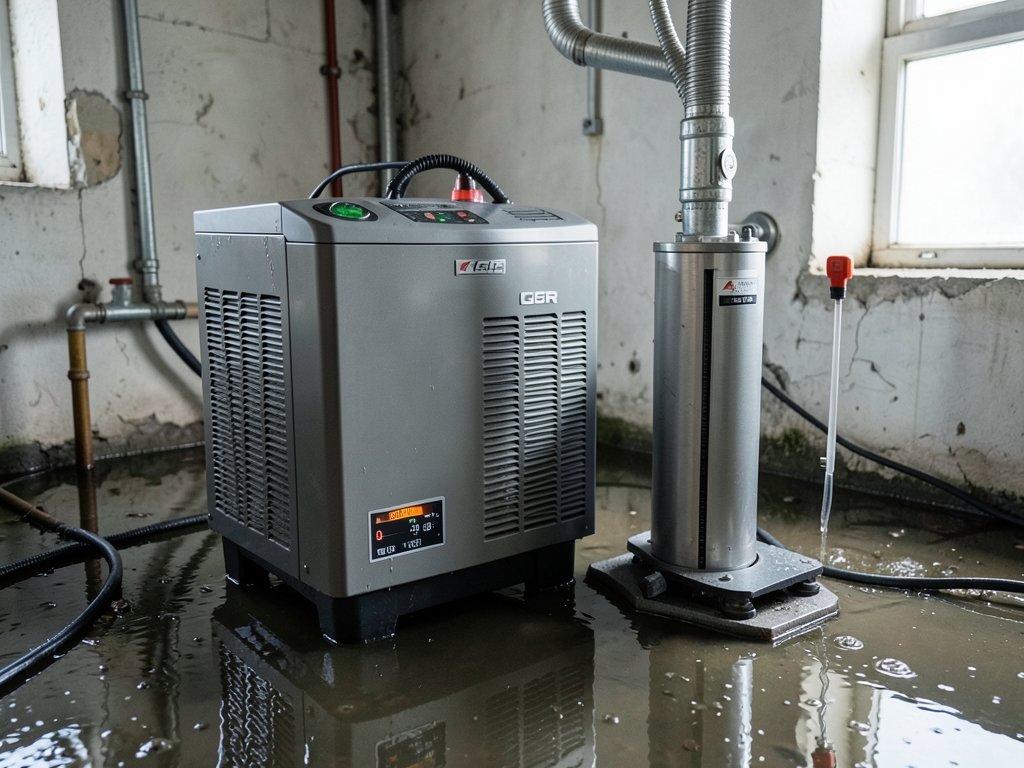
Low Grain Refrigerant (LGR) dehumidifiers remove 20-30 gallons of water per day compared to residential dehumidifiers that handle 1-2 gallons. LGR units cool air below the dew point, condensing moisture that standard units leave in the air. How to handle a sewage backup in your Orchard Park home.
Place air movers at 45-degree angles to walls, creating a vortex pattern that circulates air throughout the space. Position one air mover for every 10-12 linear feet of wall. This setup ensures air reaches all surfaces, including behind stored items.
Dehumidifiers need strategic placement. Put them in central locations with good airflow but away from walls where they might recycle their own dry air. For a typical two-car garage, you need at least two commercial dehumidifiers running continuously.
Monitor progress with moisture meters. Surface readings alone don’t tell the full story. Use penetrating moisture meters to check concrete at 1/2-inch depth and wood studs at multiple points. Concrete should read below 12% moisture content before you consider the job complete.
Step 4: Buffalo’s Unique Climate Challenges
Wheatfield’s proximity to the Erie Canal and Niagara River creates specific drying challenges that homeowners in other regions don’t face. Our high water table means groundwater can seep up through concrete floors even after surface water is removed.
During spring thaw, frozen ground prevents proper drainage. Snowmelt has nowhere to go except into basements and garages. This creates hydrostatic pressure that pushes water through concrete pores and foundation cracks.
Summer humidity in Western New York averages 70-80%, compared to 40-50% in many other regions. This means moisture evaporates more slowly and mold grows faster. Standard drying times of 3-5 days in dry climates extend to 5-7 days in Buffalo.
Temperature fluctuations also matter. Garage temperatures often drop at night, causing condensation on cold surfaces. This cycle of evaporation and condensation extends drying time and creates conditions where mold can establish itself.
Local building codes in Erie County require specific moisture content levels before reconstruction can begin. The New York State Uniform Fire Prevention and Building Code mandates that wood materials must test below 16% moisture content and concrete below 12% before covering with drywall or flooring.
Step 5: Mold Prevention Strategies That Actually Work
The 48-hour mold clock starts when materials get wet. After this window, mold spores begin colonizing damp surfaces. Prevention requires both immediate action and ongoing monitoring.
Apply EPA-registered antimicrobial treatments to all affected surfaces after initial water removal. These treatments inhibit mold growth for 30-90 days while materials dry completely. Don’t use household bleach – it doesn’t penetrate porous materials and can actually feed mold growth. EPA Mold Resources.
Monitor humidity levels continuously. Keep garage humidity below 50% during the drying process. Use a hygrometer to track progress. If humidity rises above 60%, you need more dehumidification or you have a hidden moisture source.
Check for hidden mold growth behind stored items and in wall cavities. Use a moisture meter with extended probes to check wall studs and sill plates. Mold often grows where you can’t see it, feeding on the paper backing of drywall and wood framing.
Consider professional mold testing if the water was contaminated or if you notice musty odors persisting after drying. Air quality testing can identify mold spores that aren’t visible to the naked eye.
Maintain proper ventilation after the initial drying. Install exhaust fans or keep garage doors open when weather permits. This prevents moisture buildup from seasonal humidity changes.
When DIY Isn’t Enough: Professional Restoration Signs
Some flooding situations require professional intervention regardless of your DIY skills. Recognizing these signs can prevent costly mistakes and health hazards.
Category 3 water contamination requires professional handling. This includes sewage backup, street flooding, or water that’s been standing for more than 48 hours. These situations involve bacteria, viruses, and other pathogens that require specific safety protocols and disposal methods.
Structural damage indicators include foundation cracks wider than 1/8 inch, walls that have shifted position, or garage doors that no longer operate properly. These issues can compromise your home’s structural integrity and require engineering assessment.
Hidden moisture detection often requires thermal imaging cameras. These devices show temperature differences that indicate moisture behind walls or under floors. Professional restoration companies use this technology to ensure complete drying.
Insurance claim complexity increases with larger losses. If damage affects multiple rooms or involves structural components, professional documentation and estimation become essential for proper claim settlement.
Time constraints matter. If you can’t start drying within 24 hours of water exposure, professional intervention becomes critical. The longer water sits, the more damage occurs and the higher the mold risk.
Professional restoration follows IICRC S500 standards, which specify drying goals, equipment requirements, and documentation procedures. These standards ensure thorough restoration and provide documentation that insurance companies require.
Preventative Measures for Future Protection
Installing preventative measures costs less than dealing with repeated flooding. Several solutions address Buffalo’s specific climate challenges.
Upgrade your garage floor drain system. Many Wheatfield homes have undersized or clogged floor drains that can’t handle spring thaw volumes. Install a larger drain with a backwater valve to prevent sewer backup during heavy rain.
Add a battery backup to your sump pump system. Power outages during storms are common in Western New York. A battery backup ensures continuous operation when you need it most.
Improve exterior grading around your garage. Soil should slope away from the foundation at a rate of 6 inches per 10 feet. This simple fix prevents surface water from pooling against your garage walls.
Seal concrete floors and walls with waterproofing compounds. These sealants prevent moisture vapor transmission and make cleaning easier. Choose products rated for below-grade application in high-humidity environments.
Install a humidity monitoring system with automatic dehumidifier activation. These systems maintain optimal humidity levels year-round, preventing mold growth during summer months and condensation during winter.
Consider elevating stored items on shelving units. This prevents water damage to valuable tools and equipment and makes future water removal easier.
Regular maintenance of your drainage system prevents most flooding issues. Clean gutters, extend downspouts, and inspect floor drains quarterly to ensure they’re functioning properly.
Insurance Considerations for Buffalo Homeowners
Understanding your insurance coverage before disaster strikes helps you make better decisions during emergencies. Many Wheatfield homeowners discover coverage gaps only after flooding occurs.
Standard homeowners insurance typically covers sudden and accidental water damage but excludes flooding from external sources. You need separate flood insurance through the National Flood Insurance Program for surface water flooding.
Sewage backup requires specific endorsement coverage. Many policies exclude this unless you’ve added the rider. Given Buffalo’s combined sewer systems, this coverage is particularly important for older neighborhoods.
Document damage thoroughly before beginning cleanup. Take photos and videos of all affected areas, water levels, and damaged items. This documentation supports your insurance claim and helps establish the extent of damage.
Keep receipts for all emergency services and materials purchased. Insurance companies require proof of expenses, and some policies reimburse for reasonable emergency measures you take to prevent further damage.
Understand your policy’s deductible structure. Some policies have separate deductibles for wind, hail, and water damage. Knowing these amounts helps you decide whether to file a claim or handle repairs yourself.
Consider working with a public adjuster for complex claims. These professionals advocate for you during the claims process and often secure higher settlements than homeowners achieve on their own.
Maintain detailed records of all repairs and improvements. This documentation can help establish your home’s pre-loss condition and support replacement cost valuations.
Frequently Asked Questions
How long does it take to dry out a flooded garage?
Professional drying typically takes 3-5 days for clean water damage and 5-7 days for contaminated water or concrete floors. Factors affecting drying time include water volume, material types, outside humidity, and whether you’re using professional equipment. DIY efforts often take twice as long and may not achieve complete drying.
Can I use household fans instead of professional equipment?
Household fans provide minimal benefit for garage flooding. They move about 1,500 cubic feet per minute compared to professional air movers at 3,000-5,000 CFM. More importantly, they don’t create the focused airflow needed to break through moisture boundary layers on wet surfaces. You’ll spend more on electricity and get inferior results.
What’s the difference between clean and contaminated water damage?
Clean water comes from broken pipes or rainwater and poses minimal health risks if addressed quickly. Contaminated water includes sewage, street flooding, or water that’s been standing more than 48 hours. Category 3 water contains bacteria, viruses, and other pathogens requiring specific safety protocols, disposal methods, and often professional restoration.
How do I know when my garage is completely dry?
Complete drying requires moisture readings below 12% for concrete and below 16% for wood materials. Surface dryness feels different from internal moisture content. Use a penetrating moisture meter to check materials at depth. If humidity levels remain above 50% or you notice musty odors, additional drying is needed.
Will my insurance cover garage flooding?
Coverage depends on the water source. Sudden pipe breaks are usually covered under standard policies. External flooding requires separate flood insurance. Sewage backup needs specific endorsement coverage. Document damage thoroughly and understand your policy limits before beginning cleanup to ensure proper claim filing.
Take Action Before Mold Takes Over
Standing water in your Wheatfield garage creates a ticking clock. Every hour increases the risk of structural damage and mold growth. The right equipment and techniques can save you thousands in repairs and protect your family’s health.
If you’re dealing with more than one inch of water, contaminated water, or damage that spans multiple areas, don’t wait. Professional restoration services have the equipment, training, and experience to handle Buffalo’s unique climate challenges effectively.
Call (716) 317-7717 today to schedule your inspection. Our team responds 24/7 to emergency flooding situations throughout Wheatfield and the greater Buffalo area. We’ll assess the damage, provide a clear restoration plan, and help you navigate the insurance process. For more information, visit FEMA Flood Insurance Information.
Don’t let a flooded garage become a mold nightmare. Pick up the phone and call (716) 317-7717 before the next storm hits. Your home’s structural integrity and your family’s health depend on quick, professional action.
{
“@context”: “https://schema.org”,
“@type”: “BlogPosting”,
“headline”: “How to Dry Out a Wet Garage in Wheatfield Without Growing Mold”,
“description”: “Learn the exact steps to safely dry your flooded Wheatfield garage using professional equipment and prevent mold growth in Buffalo’s humid climate.”,
“wordCount”: 2287,
“datePublished”: “2026-04-30T12:50:00.000Z”,
“dateModified”: “2026-04-30T12:50:00.000Z”,
“inLanguage”: “en-US”,
“mainEntityOfPage”: {
“@type”: “WebPage”,
“@id”: “https://alphawaterdamagerestorationbuffalo.com”
},
“publisher”: {
“@type”: “LocalBusiness”,
“name”: “Alpha Water Damage Restoration Buffalo”,
“url”: “https://alphawaterdamagerestorationbuffalo.com”
},
“author”: {
“@type”: “Organization”,
“name”: “Alpha Water Damage Restoration Buffalo”,
“url”: “https://alphawaterdamagerestorationbuffalo.com”
},
“image”: {
“@type”: “ImageObject”,
“url”: “https://alphawaterdamagerestorationbuffalo.com/wp-content/uploads/2026/03/how-to-dry-out-a-wet-garage-in-wheatfield-without-1.png”
}
}
{
“@context”: “https://schema.org”,
“@type”: “LocalBusiness”,
“name”: “Alpha Water Damage Restoration Buffalo”,
“url”: “https://alphawaterdamagerestorationbuffalo.com”,
“address”: {
“@type”: “PostalAddress”,
“addressLocality”: “Buffalo”
},
“areaServed”: {
“@type”: “City”,
“name”: “Buffalo”
}
}
{
“@context”: “https://schema.org”,
“@type”: “FAQPage”,
“mainEntity”: [
{
“@type”: “Question”,
“name”: “How long does it take to dry out a flooded garage?”,
“acceptedAnswer”: {
“@type”: “Answer”,
“text”: “Professional drying typically takes 3-5 days for clean water damage and 5-7 days for contaminated water or concrete floors. Factors affecting drying time include water volume, material types, outside humidity, and whether you’re using professional equipment. DIY efforts often take twice as long and may not achieve complete drying.”
}
},
{
“@type”: “Question”,
“name”: “Can I use household fans instead of professional equipment?”,
“acceptedAnswer”: {
“@type”: “Answer”,
“text”: “Household fans provide minimal benefit for garage flooding. They move about 1,500 cubic feet per minute compared to professional air movers at 3,000-5,000 CFM. More importantly, they don’t create the focused airflow needed to break through moisture boundary layers on wet surfaces. You’ll spend more on electricity and get inferior results.”
}
},
{
“@type”: “Question”,
“name”: “What’s the difference between clean and contaminated water damage?”,
“acceptedAnswer”: {
“@type”: “Answer”,
“text”: “Clean water comes from broken pipes or rainwater and poses minimal health risks if addressed quickly. Contaminated water includes sewage, street flooding, or water that’s been standing more than 48 hours. Category 3 water contains bacteria, viruses, and other pathogens requiring specific safety protocols, disposal methods, and often professional restoration.”
}
},
{
“@type”: “Question”,
“name”: “How do I know when my garage is completely dry?”,
“acceptedAnswer”: {
“@type”: “Answer”,
“text”: “Complete drying requires moisture readings below 12% for concrete and below 16% for wood materials. Surface dryness feels different from internal moisture content. Use a penetrating moisture meter to check materials at depth. If humidity levels remain above 50% or you notice musty odors, additional drying is needed.”
}
},
{
“@type”: “Question”,
“name”: “Will my insurance cover garage flooding?”,
“acceptedAnswer”: {
“@type”: “Answer”,
“text”: “Coverage depends on the water source. Sudden pipe breaks are usually covered under standard policies. External flooding requires separate flood insurance. Sewage backup needs specific endorsement coverage. Document damage thoroughly and understand your policy limits before beginning cleanup to ensure proper claim filing.”
}
}
]
}
{
“@context”: “https://schema.org”,
“@type”: “BreadcrumbList”,
“itemListElement”: [
{
“@type”: “ListItem”,
“position”: 1,
“name”: “Home”,
“item”: “https://alphawaterdamagerestorationbuffalo.com”
},
{
“@type”: “ListItem”,
“position”: 2,
“name”: “Blog”,
“item”: “https://alphawaterdamagerestorationbuffalo.com/blog”
},
{
“@type”: “ListItem”,
“position”: 3,
“name”: “How to Dry Out a Wet Garage in Wheatfield Without Growing Mold”
}
]
}
{
“@context”: “https://schema.org”,
“@type”: “Service”,
“serviceType”: “Water Damage Restoration”,
“provider”: {
“@type”: “LocalBusiness”,
“name”: “Alpha Water Damage Restoration Buffalo”,
“url”: “https://alphawaterdamagerestorationbuffalo.com”
},
“areaServed”: {
“@type”: “City”,
“name”: “Buffalo”
},
“description”: “Learn the exact steps to safely dry your flooded Wheatfield garage using professional equipment and prevent mold growth in Buffalo’s humid climate.”
}