
Drying Out Wet Insulation in a Marilla Pole Barn or Detached Garage
When insulation in your Marilla pole barn or detached garage gets wet, you’re facing more than just a soggy mess. In Western New York’s freeze-thaw climate, trapped moisture creates the perfect conditions for mold growth, structural rot, and rapid energy loss. The metal siding common in post-frame construction means water can travel unseen along girts and purlins, making the problem worse before you notice it. Safe basement water removal services in Lancaster NY.
Wet insulation in a pole barn isn’t like a damp basement wall. Metal buildings create unique condensation patterns where warm, moist air meets cold surfaces. Without proper vapor barriers and ventilation, you can have what locals call ‘rain under the roof’ even when the sky is clear. This guide shows you exactly what to do when your insulation gets wet, when to call professionals, and how to prevent the problem from returning.. Read more about How to Dry Out a Wet Garage in Wheatfield Without Growing Mold.
Why is Your Pole Barn Insulation Wet? Understanding the Source
Before deciding whether to save or replace wet insulation, you need to understand what caused the moisture. In Marilla’s rural setting, several factors create the perfect storm for insulation problems.
Roof leaks and fastener failures are the most common culprits. Over time, the rubber washers on metal roof screws deteriorate, especially after heavy snow loads common in Erie County. Water follows the path of least resistance, traveling along girts before dripping onto insulation below. Look for rust streaks on metal panels or water stains on ceiling materials.
Condensation and the ‘rain under the roof’ effect plague unheated pole barns. When warm, humid air from livestock, equipment, or even ground moisture rises and contacts cold metal surfaces, it reaches its dew point and releases moisture. This creates what looks like indoor rain, saturating insulation from above. Marilla’s proximity to Lake Erie means higher humidity levels that worsen this effect.
Groundwater seepage and wicking can affect pole barns with dirt floors or poor drainage. Water moves through capillary action, climbing up foundation posts and into insulation. This is especially problematic in areas with heavy clay soils common in parts of Wyoming County. EPA Mold Resources.
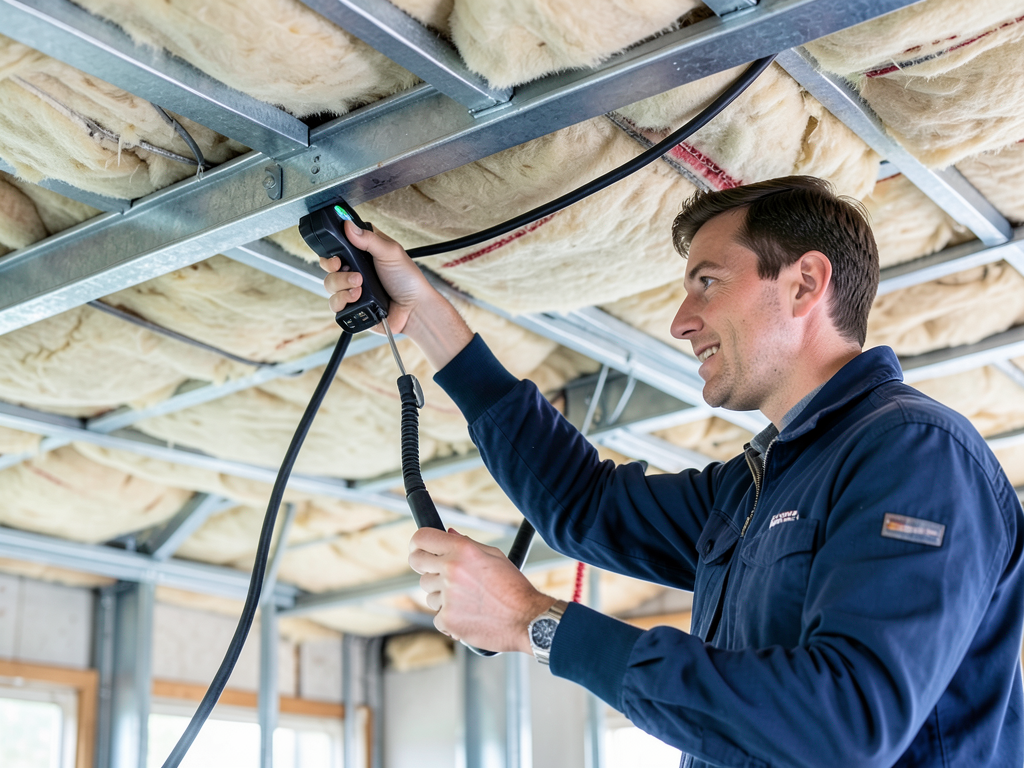
Photo showing water damage patterns in pole barn insulation, with moisture mapping using thermal imaging to identify affected areas.
Can Wet Insulation Be Saved? The ‘Dry-Out’ vs. ‘Tear-Out’ Decision Framework
Not all wet insulation needs replacement. The decision depends on the type of insulation, how long it’s been wet, and whether mold has started growing. Here’s the framework we use on every Marilla job site.
Fiberglass batts present a unique challenge. While they don’t absorb water like cellulose, they lose their insulating properties when wet. More importantly, fiberglass creates the perfect environment for mold if moisture remains for more than 48-72 hours. In Marilla’s humid climate, that timeline shrinks. The insulation may feel dry on the surface while retaining moisture in the center, creating hidden mold colonies.
Closed-cell spray foam handles moisture differently. Its closed-cell structure resists water absorption, making it more likely to survive a wetting event. However, if the foam surface shows discoloration or the underlying wood shows signs of rot, the entire system needs evaluation. We use moisture meters at multiple depths to assess true saturation levels. How to handle a sewage backup in your Orchard Park home.
Cellulose insulation is the highest risk material. Made from recycled paper products, it becomes a mold incubator when wet. Even if you dry it completely, the paper fibers lose their fire retardant properties and structural integrity. In most cases, wet cellulose in a pole barn requires complete removal and replacement.
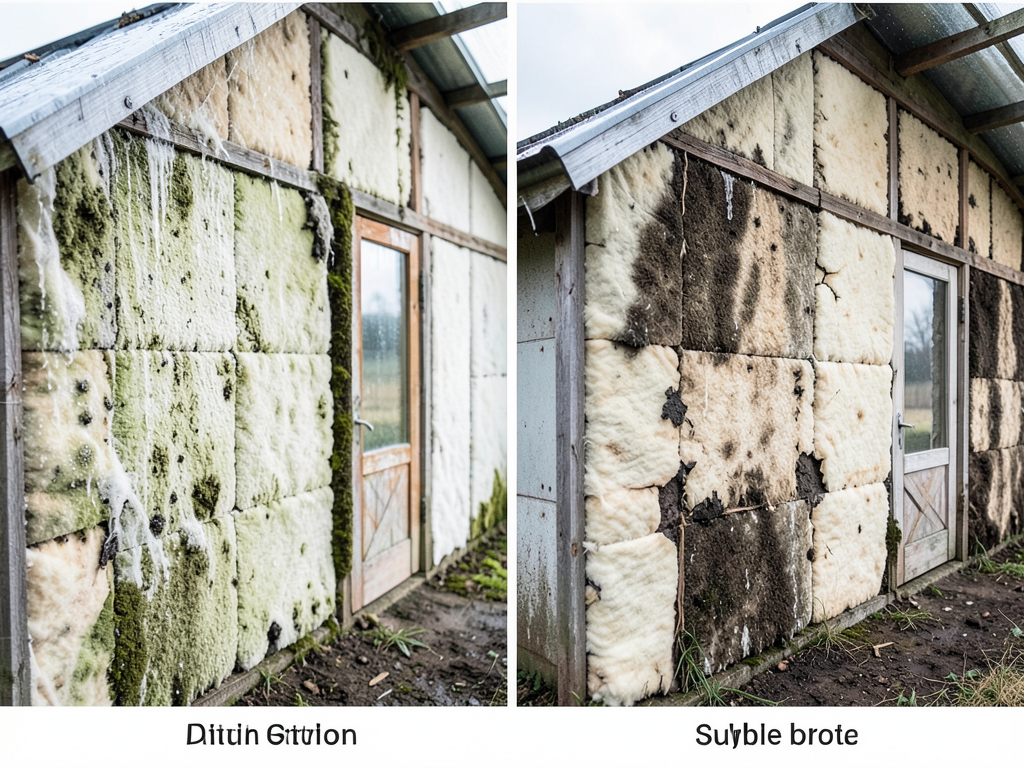
Comparison chart showing different insulation types and their moisture resistance, drying potential, and mold risk factors.
The Buffalo Climate Factor: Humidity and Lake Effect Challenges
Marilla sits in the heart of Western New York’s unique climate zone, where Lake Erie’s influence creates conditions that accelerate moisture problems in pole barns and detached structures. Understanding these local factors is crucial for proper restoration. Choosing a Restoration Company.
During winter, Marilla experiences freeze-thaw cycles that can occur multiple times per week. Water trapped in insulation expands when it freezes, breaking down the material’s structure. This creates pathways for more moisture to enter, creating a destructive cycle. The ground around your pole barn may thaw while the air temperature remains below freezing, causing condensation on metal surfaces.
Spring brings another challenge. As snow melts off Marilla’s many agricultural buildings, the rapid temperature changes create ideal conditions for condensation. Water vapor from melting snowbanks around your pole barn foundation can enter through the lowest course of metal siding, wicking up into wall insulation.
Summer humidity in Marilla often exceeds 80%, creating conditions where even small leaks become major problems. The New York State Uniform Fire Prevention and Building Code requires specific vapor barrier installations for agricultural buildings, but many older pole barns in Marilla were built before these standards existed.. Read more about How to Tell if a Small Roof Leak is Actually a Major Mold Risk in Your Eden Home.
Professional Restoration Process for Pole Barns
When you call Alpha Water Damage Restoration Buffalo for wet insulation in your Marilla pole barn, here’s exactly what happens. Our process follows IICRC S500 standards for water damage restoration, adapted for post-frame construction.
First, we conduct a complete moisture assessment using thermal imaging cameras and penetrating moisture meters. This shows us exactly where water has traveled, often revealing hidden damage behind metal siding. In pole barns, water can travel 10-15 feet from the entry point before showing visible signs.
Second, we establish containment if mold is present. New York State Labor Law Article 32 requires specific protocols for mold remediation, including negative air pressure and HEPA filtration. We seal off affected areas to prevent spore spread to livestock areas or stored equipment. Retail Store Water Cleanup.
Third, we remove compromised materials. This might mean cutting out sections of wet insulation, removing damaged metal siding, or even replacing rotted structural members. In pole barns, we pay special attention to the girts and purlins, as these horizontal members trap moisture against vertical posts.
Fourth, we implement structural drying using industrial dehumidifiers and air movers. Pole barns require different equipment placement than residential buildings due to their large, open volumes. We calculate the cubic footage and establish drying chambers to create optimal conditions for moisture removal.
Finally, we apply antimicrobial treatments to prevent future mold growth and recommend ventilation improvements to prevent recurrence. This might include adding ridge vents, soffit ventilation, or even simple solutions like circulating fans for livestock areas.
Preventative Measures: Vapor Barriers and Proper Ventilation
After restoration, preventing future moisture problems becomes your priority. In Marilla’s climate, this means addressing both the symptoms and the underlying causes of insulation wetting.
Vapor barriers are your first line of defense. The right barrier depends on your building’s use. For unheated storage barns, a Class II vapor retarder on the warm side of insulation prevents moisture migration. For buildings with animals or equipment that generate heat and humidity, you need a more sophisticated system that allows some moisture transmission while blocking bulk water.
Ventilation design for pole barns differs from residential construction. The large, open volumes and metal surfaces require more air changes per hour. We recommend a combination of passive ventilation (ridge vents, soffit vents) and active systems (exhaust fans, circulating fans) based on your building’s specific use and local wind patterns.
Roof maintenance prevents many moisture problems before they start. Check metal roof fasteners annually, especially after heavy snow seasons. Replace deteriorated rubber washers and ensure all penetrations (skylights, vents, chimneys) have proper flashing. In Marilla, we recommend inspections every spring and fall due to the extreme seasonal changes.
Ground moisture control is often overlooked. For pole barns with dirt floors or gravel bases, consider installing a vapor barrier under the floor material. This prevents ground moisture from wicking up into your building’s lower walls and creating condensation on cooler surfaces.
When to Call the Professionals: Red Flags That Can’t Wait
Some wet insulation situations require immediate professional attention. Here are the warning signs that mean you should call (716) 317-7717 right now.
If you see black, green, or white fuzzy growth on insulation or surrounding wood, you have active mold colonization. In Marilla’s climate, this can spread rapidly, especially in areas with livestock or stored organic materials. The health risks increase significantly when mold species like Stachybotrys (black mold) establish themselves.
Structural concerns demand immediate attention. If you notice sagging ceilings, warped walls, or doors that suddenly won’t close properly, moisture has compromised your building’s structural integrity. In pole barns, this often means rot in the pressure-treated posts or decay in the girts and purlins.
Persistent musty odors that don’t improve with ventilation indicate hidden moisture problems. These smells often come from mold growing inside wall cavities or above ceiling insulation where you can’t see it. By the time odors become noticeable, the problem has usually been developing for weeks or months.
Water stains that reappear after cleaning or paint peeling in patterns suggest ongoing moisture intrusion. This indicates an active leak or condensation problem that will worsen over time, potentially leading to electrical hazards or equipment damage in your pole barn.
Technician using moisture meter on pole barn post, demonstrating the diagnostic process for assessing structural damage in post-frame construction.
Insurance and Claims for Non-Residential Water Damage
Many Marilla property owners don’t realize that water damage to pole barns and detached garages may be covered under their insurance policies. The claims process differs from residential water damage, and understanding your coverage can save you thousands in restoration costs. How to Handle Insurance Claims.
Commercial property insurance often covers water damage to agricultural buildings and storage structures. However, the cause of the water intrusion matters significantly. Sudden events like storm damage or burst pipes are typically covered, while gradual damage from poor maintenance may be excluded. Document everything with photos and keep all receipts for emergency measures you take.
For agricultural operations in Marilla, crop insurance or farm liability policies might extend to cover water damage to barns and equipment storage buildings. These policies often have specific provisions for business interruption, which can be crucial if your pole barn houses livestock or equipment essential to your operation.
The claims process for non-residential structures often moves faster than residential claims because the damage is usually more visible and the financial impact more immediate. Insurance adjusters understand that water in a pole barn can damage expensive equipment, contaminate feed supplies, or create unsafe conditions for animals.
Alpha Water Damage Restoration Buffalo works directly with insurance companies to document damage, provide detailed estimates, and ensure your claim includes all necessary restoration work. We understand the specific codes and standards that apply to agricultural buildings in Erie and Wyoming counties, which helps streamline the approval process.
Cost Factors and Restoration Timeline
The cost to restore wet insulation in a Marilla pole barn varies significantly based on several factors. Understanding these variables helps you make informed decisions about when to repair versus replace.
Building size and accessibility affect labor costs dramatically. A 30×40 foot detached garage with good access costs far less to restore than a 60×120 foot pole barn with limited interior access. The height of your building also matters, as taller structures require special equipment for safe material removal and installation.
Material costs fluctuate based on the type of insulation you choose for replacement. Spray foam costs more upfront but provides superior moisture resistance and energy efficiency. Fiberglass remains the most economical option but may require more frequent replacement in Marilla’s humid climate.
The extent of secondary damage drives up restoration costs significantly. If moisture has caused structural rot in posts or damage to electrical systems, you’re looking at a much larger project. Early intervention usually means lower total costs, as problems caught quickly rarely require structural repairs.
Timeline expectations vary by season and damage severity. Emergency response within 24 hours can prevent most secondary damage, keeping restoration to 3-5 days for simple insulation replacement. Complex projects involving structural repairs or mold remediation may take 1-2 weeks, especially during Marilla’s busy spring storm season.
Frequently Asked Questions
How can I tell if my pole barn insulation is wet if I can’t see it?
Look for sagging ceiling materials, rust streaks on metal siding, musty odors, or condensation on interior surfaces. A moisture meter can detect hidden wetness, or you can check for temperature differences using an infrared thermometer.
Will wet insulation dry out on its own in my pole barn?
Possibly, but it’s risky. Natural drying can take weeks in Marilla’s humid climate, during which mold can establish itself. The insulation also loses its R-value when wet, so even if it dries, it won’t perform properly.
Can I stay in my house if my attached garage has wet insulation?
For attached structures, the main concern is mold spores potentially entering your living space. If the garage is separated by fire-rated walls and you don’t smell musty odors inside, you can usually stay. However, address the problem quickly to prevent it from spreading.
How much does it cost to replace insulation in a typical Marilla pole barn?
Costs range from $1,500 to $8,000 depending on barn size, insulation type, and whether structural repairs are needed. A 30×40 foot barn with fiberglass replacement might cost $2,000-3,000, while a larger building with spray foam could exceed $6,000.
Should I replace all my insulation if only one section is wet?
Not necessarily. If the moisture source is isolated and hasn’t been present long, you can often replace just the affected section. However, if you find mold or the insulation has been wet for more than 72 hours, replacing entire bays or walls may be safer.
Take Action Before the Next Storm Hits
Wet insulation in your Marilla pole barn or detached garage isn’t just an inconvenience—it’s a threat to your property’s value, your equipment’s safety, and potentially your health. The combination of Western New York’s harsh climate and the unique construction of post-frame buildings means moisture problems can escalate quickly from minor to catastrophic.
Don’t wait until you’re dealing with mold colonies, structural rot, or ruined equipment. The sooner you address wet insulation, the more options you have for saving materials and preventing secondary damage. Our team at Alpha Water Damage Restoration Buffalo understands the specific challenges that Marilla property owners face, from lake effect humidity to freeze-thaw cycles that stress building materials.
We’re ready to respond 24/7 with the equipment, expertise, and local knowledge to handle your wet insulation emergency properly the first time. Call (716) 317-7717 today to schedule your free moisture inspection. We’ll assess the damage, explain your options clearly, and provide a detailed plan to restore your pole barn or garage to better-than-new condition.
Don’t let wet insulation become a mold problem, a structural problem, or a health problem. Pick up the phone and call (716) 317-7717 before the next storm hits. Your property deserves professional care from people who understand Western New York’s unique challenges.
Need help with other water damage issues? Check out our guides on frozen pipe repair in Clarence or commercial water damage in Buffalo. For more information, visit International Building Code.
{
“@context”: “https://schema.org”,
“@type”: “BlogPosting”,
“headline”: “Drying Out Wet Insulation in a Marilla Pole Barn or Detached Garage”,
“description”: “Discover how to handle wet insulation in Marilla pole barns and detached garages. Learn when to save vs. replace insulation and prevent mold in Western NY’s harsh climate.”,
“wordCount”: 2525,
“datePublished”: “2026-06-09T09:30:00.000Z”,
“dateModified”: “2026-06-09T09:30:00.000Z”,
“inLanguage”: “en-US”,
“mainEntityOfPage”: {
“@type”: “WebPage”,
“@id”: “https://alphawaterdamagerestorationbuffalo.com”
},
“publisher”: {
“@type”: “LocalBusiness”,
“name”: “Alpha Water Damage Restoration Buffalo”,
“url”: “https://alphawaterdamagerestorationbuffalo.com”
},
“author”: {
“@type”: “Organization”,
“name”: “Alpha Water Damage Restoration Buffalo”,
“url”: “https://alphawaterdamagerestorationbuffalo.com”
},
“image”: {
“@type”: “ImageObject”,
“url”: “https://alphawaterdamagerestorationbuffalo.com/wp-content/uploads/2026/03/drying-out-wet-insulation-in-a-marilla-pole-barn-o-1.png”
}
}
{
“@context”: “https://schema.org”,
“@type”: “LocalBusiness”,
“name”: “Alpha Water Damage Restoration Buffalo”,
“url”: “https://alphawaterdamagerestorationbuffalo.com”,
“address”: {
“@type”: “PostalAddress”,
“addressLocality”: “Buffalo”
},
“areaServed”: {
“@type”: “City”,
“name”: “Buffalo”
}
}
{
“@context”: “https://schema.org”,
“@type”: “FAQPage”,
“mainEntity”: [
{
“@type”: “Question”,
“name”: “How can I tell if my pole barn insulation is wet if I can’t see it?”,
“acceptedAnswer”: {
“@type”: “Answer”,
“text”: “Look for sagging ceiling materials, rust streaks on metal siding, musty odors, or condensation on interior surfaces. A moisture meter can detect hidden wetness, or you can check for temperature differences using an infrared thermometer.”
}
},
{
“@type”: “Question”,
“name”: “Will wet insulation dry out on its own in my pole barn?”,
“acceptedAnswer”: {
“@type”: “Answer”,
“text”: “Possibly, but it’s risky. Natural drying can take weeks in Marilla’s humid climate, during which mold can establish itself. The insulation also loses its R-value when wet, so even if it dries, it won’t perform properly.”
}
},
{
“@type”: “Question”,
“name”: “Can I stay in my house if my attached garage has wet insulation?”,
“acceptedAnswer”: {
“@type”: “Answer”,
“text”: “For attached structures, the main concern is mold spores potentially entering your living space. If the garage is separated by fire-rated walls and you don’t smell musty odors inside, you can usually stay. However, address the problem quickly to prevent it from spreading.”
}
},
{
“@type”: “Question”,
“name”: “How much does it cost to replace insulation in a typical Marilla pole barn?”,
“acceptedAnswer”: {
“@type”: “Answer”,
“text”: “Costs range from $1,500 to $8,000 depending on barn size, insulation type, and whether structural repairs are needed. A 30×40 foot barn with fiberglass replacement might cost $2,000-3,000, while a larger building with spray foam could exceed $6,000.”
}
},
{
“@type”: “Question”,
“name”: “Should I replace all my insulation if only one section is wet?”,
“acceptedAnswer”: {
“@type”: “Answer”,
“text”: “Not necessarily. If the moisture source is isolated and hasn’t been present long, you can often replace just the affected section. However, if you find mold or the insulation has been wet for more than 72 hours, replacing entire bays or walls may be safer.”
}
}
]
}
{
“@context”: “https://schema.org”,
“@type”: “BreadcrumbList”,
“itemListElement”: [
{
“@type”: “ListItem”,
“position”: 1,
“name”: “Home”,
“item”: “https://alphawaterdamagerestorationbuffalo.com”
},
{
“@type”: “ListItem”,
“position”: 2,
“name”: “Blog”,
“item”: “https://alphawaterdamagerestorationbuffalo.com/blog”
},
{
“@type”: “ListItem”,
“position”: 3,
“name”: “Drying Out Wet Insulation in a Marilla Pole Barn or Detached Garage”
}
]
}
{
“@context”: “https://schema.org”,
“@type”: “Service”,
“serviceType”: “Water Damage Restoration”,
“provider”: {
“@type”: “LocalBusiness”,
“name”: “Alpha Water Damage Restoration Buffalo”,
“url”: “https://alphawaterdamagerestorationbuffalo.com”
},
“areaServed”: {
“@type”: “City”,
“name”: “Buffalo”
},
“description”: “Discover how to handle wet insulation in Marilla pole barns and detached garages. Learn when to save vs. replace insulation and prevent mold in Western NY’s harsh climate.”
}