
Who Pays for Water Damage Restoration in a Fruit Belt Multi-Family Rental?
When water floods a rental unit in Buffalo’s Fruit Belt, the first question isn’t about extraction—it’s about money. Who covers the restoration costs? The answer depends on the source of the damage, the terms of the lease, and New York State law. Understanding these factors before disaster strikes can save you thousands and prevent disputes between landlords and tenants. New York Real Property Law § 235-b Warranty of Habitability.
Water damage in multi-family rentals creates unique challenges. Unlike single-family homes where one owner makes all decisions, rental properties involve multiple stakeholders with competing interests. The urgency of water damage restoration means decisions must happen fast, but the financial responsibility can be murky. This guide breaks down exactly who pays for what in Fruit Belt rental properties, what New York law requires, and how to handle the restoration process efficiently. Repairing water damage from frozen pipes in Clarence.
Understanding Water Damage Liability in Buffalo Rentals
New York State’s Warranty of Habitability requires landlords to maintain rental properties in safe, livable condition. This legal doctrine means landlords must provide functioning plumbing, heating, and electrical systems. When water damage results from failed infrastructure—burst pipes, roof leaks, or plumbing failures—the landlord typically bears responsibility for both repairs and restoration. Commercial water damage and drying experts in Downtown Buffalo.
However, tenant negligence creates a different scenario. If a tenant leaves windows open during a storm, overflows a bathtub, or causes a plumbing backup through misuse, they may be financially responsible for resulting damage. The distinction often comes down to cause and documentation.
Most landlord insurance policies cover structural damage and building systems, while tenant insurance (renters insurance) covers personal property. Understanding these coverage boundaries helps determine who pays for restoration services. When both policies are active and properly documented, the claims process becomes straightforward. How to Handle Insurance Claims.
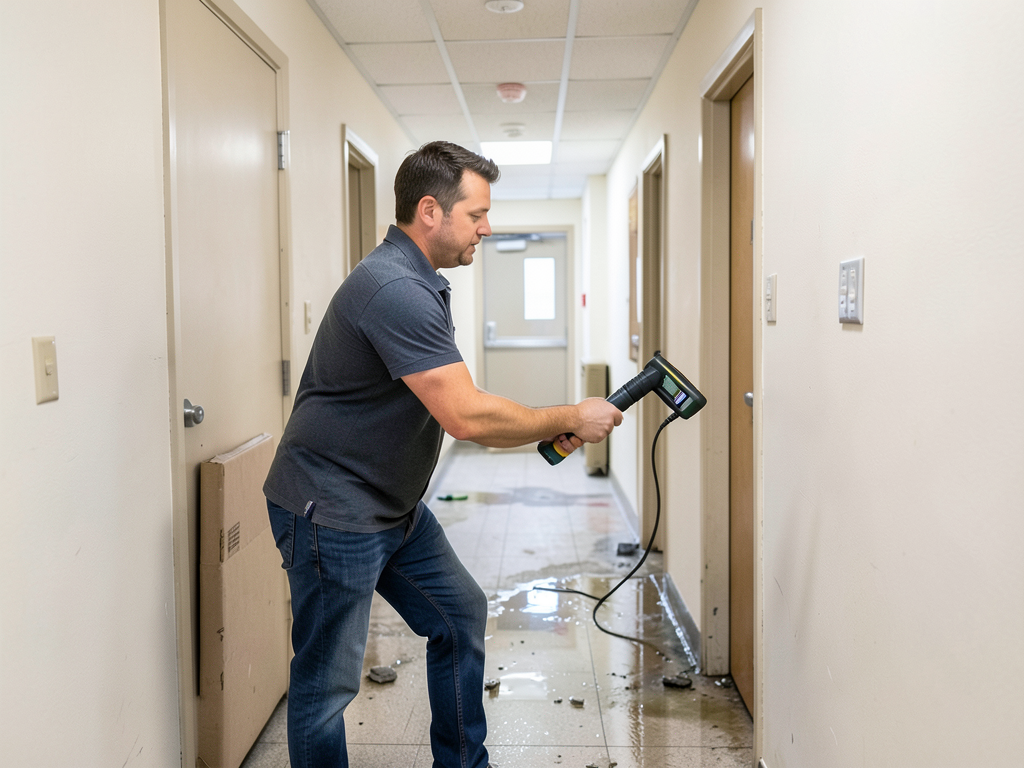
Technician using moisture meter to assess water damage in multi-unit apartment hallway
Common Water Damage Sources in Fruit Belt Rentals
Fruit Belt’s historic architecture creates specific vulnerabilities. Many buildings date to the early 1900s with aging plumbing systems, original plaster walls, and shared water lines between units. These factors contribute to unique failure patterns. Safe basement water removal services in Lancaster NY.
Burst pipes represent the most frequent emergency call during Buffalo winters. The area’s freeze-thaw cycles, combined with Fruit Belt’s older housing stock, create perfect conditions for pipe failure. When temperatures fluctuate rapidly, water trapped in exterior walls or uninsulated pipes expands and contracts, weakening pipe joints until they fail catastrophically.. Read more about Restoring Water Damaged Foreclosures and Vacant Properties in Masten Park.
Roof leaks affect multi-story buildings differently than single-family homes. Water travels along ceiling joists and wall cavities, often appearing in units far from the actual leak source. This makes diagnosis challenging and restoration more complex, as multiple units may require simultaneous work.
Basement flooding affects ground-floor units most severely. Fruit Belt’s proximity to Buffalo’s combined sewer system means heavy rains can overwhelm drainage capacity. When this happens, water backs up through floor drains or seeps through foundation walls, affecting multiple units simultaneously.
Landlord Responsibilities Under New York Law
Under New York Real Property Law § 235-b, landlords must maintain premises in habitable condition. This includes providing adequate heat, hot water, and plumbing. When water damage results from landlord negligence—failure to maintain roof, ignoring previous leak reports, or not winterizing vacant units—the landlord bears full financial responsibility.
The law also requires landlords to address habitability issues within reasonable timeframes. Water damage creates immediate habitability concerns through mold risk, electrical hazards, and structural instability. Courts generally consider 24-48 hours reasonable for emergency response, though this varies by severity.
Landlords must also comply with Erie County Health Department regulations regarding mold and moisture. When water damage creates conditions conducive to mold growth, landlords face additional remediation requirements beyond simple drying and repair.. Read more about Finding the Best Local Repair Team for Leaking Steam Radiators in North Buffalo.
Tenant Rights and Responsibilities
Tenants have the right to habitable premises under New York law. This means they can withhold rent if landlords fail to address serious habitability issues, including extensive water damage. However, withholding rent requires proper notice and documentation to avoid eviction proceedings.
Tenants must also maintain their units in reasonable condition. This includes promptly reporting leaks, not causing intentional damage, and using plumbing fixtures properly. When tenants cause damage through negligence, they may be responsible for repair costs beyond their security deposit.
Most landlords require renters insurance as a lease condition. This insurance typically covers personal property damage and may provide liability coverage if the tenant causes damage affecting other units. Understanding policy specifics helps determine coverage applicability.
Insurance Coverage Breakdown
Landlord insurance policies generally cover building structure, plumbing systems, and liability for tenant injuries. These policies typically exclude tenant personal property and may have specific exclusions for certain water damage types, such as flood damage requiring separate coverage.
Tenant insurance (HO-4 policies) covers personal belongings, liability for damage to others’ property, and additional living expenses if displacement becomes necessary. Many tenants don’t realize their coverage extends to liability for damage they cause affecting other units.
When both policies are active, the claims process involves coordination between insurers. The restoration company often acts as intermediary, providing documentation to both parties and helping navigate coverage determinations.
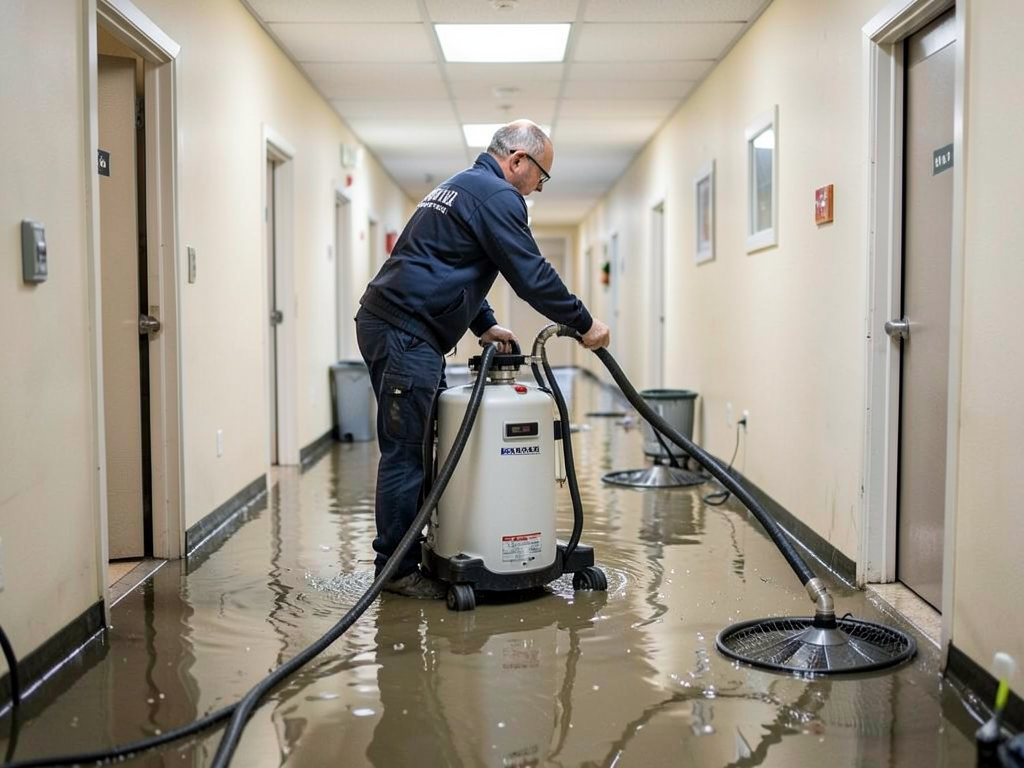
Water extraction equipment operating in flooded multi-unit residential hallway
Our Emergency Restoration Process for Multi-Family Properties
Multi-family water damage requires specialized protocols to minimize tenant disruption and ensure thorough restoration. Our process begins with immediate emergency response, available 24/7 throughout Buffalo including Fruit Belt.
Initial assessment involves documenting damage extent across all affected units, identifying water source, and determining contamination level according to IICRC S500 standards. Category 1 water from clean sources requires different handling than Category 3 sewage contamination. IICRC S500 Standard for Professional Water Damage Restoration.
Water extraction follows immediately using commercial-grade equipment capable of handling multiple units simultaneously. Our truck-mounted extraction units remove thousands of gallons per hour, significantly reducing drying time and secondary damage risk.
Structural drying employs industrial air movers and dehumidifiers strategically placed to create optimal drying conditions. We monitor moisture levels daily using moisture meters and thermal imaging cameras, ensuring complete drying before reconstruction begins.
Mold prevention starts during the drying phase. We apply antimicrobial treatments to affected surfaces and maintain negative air pressure to prevent cross-contamination between units. This is crucial in multi-family buildings where shared wall cavities can harbor moisture.
Documentation for Insurance and Legal Protection
Proper documentation protects all parties involved. We provide detailed damage assessments, moisture mapping, and photographic documentation throughout the restoration process. This documentation becomes crucial for insurance claims and potential legal proceedings.
For landlords, we document pre-existing conditions, damage progression, and restoration steps taken. This protects against future tenant claims and supports insurance documentation requirements.
For tenants, we document personal property affected, temporary relocation needs, and restoration timelines. This supports renters insurance claims and potential rent abatement negotiations.
All documentation follows industry standards and maintains chain of custody for potential legal proceedings. We understand that water damage in rentals can lead to disputes, so our documentation process is thorough and defensible.
Tenant Relocation and Rent Abatement
Extensive water damage may require tenant relocation during restoration. New York law doesn’t specifically address rent abatement for temporary displacement, but courts have established precedents based on habitability standards and reasonable timeframes.
Minor damage affecting one room might not justify rent reduction, while whole-unit displacement for extended periods typically warrants rent abatement. The specific circumstances, including alternative housing availability and damage severity, influence reasonable accommodation.
We work with property managers to minimize tenant disruption through phased restoration when possible. This might involve drying one section while protecting occupied areas, though this approach extends overall project duration.
Preventing Future Water Damage
Prevention costs far less than restoration. For Fruit Belt properties, we recommend annual plumbing inspections, roof maintenance before winter, and proper insulation of vulnerable pipes. These preventive measures significantly reduce emergency call frequency.
Installing water detection systems in high-risk areas provides early warning for slow leaks that might otherwise cause extensive damage before discovery. These systems can automatically shut off water supply when leaks are detected.
Regular maintenance of shared building systems, including water heaters and main supply lines, prevents many common failure scenarios. We provide maintenance recommendations specific to each property’s age and construction type.
Cost Factors and Payment Structures
Restoration costs vary based on damage extent, contamination level, and required reconstruction. Category 1 clean water damage from a burst pipe costs significantly less per square foot than Category 3 sewage contamination requiring complete material removal. How to handle a sewage backup in your Orchard Park home.
Emergency response fees apply for after-hours service, though waiting until business hours for non-emergency situations can significantly increase overall damage extent and final costs.
We provide detailed estimates before beginning work, though emergency situations sometimes require immediate action before full assessment is possible. In these cases, we establish cost parameters and communicate regularly about any changes.
Why Choose Local Buffalo Expertise
Fruit Belt’s unique characteristics require local knowledge. Our team understands the area’s specific building patterns, common failure modes, and insurance claim processes used by local companies. This expertise translates to faster response times and more accurate assessments.
We maintain relationships with local insurance adjusters and understand Erie County’s specific requirements for rental property restoration. This familiarity streamlines the claims process and helps ensure proper coverage application.
Our 24/7 availability means we can respond within an hour anywhere in Buffalo, including Fruit Belt. This rapid response often prevents minor incidents from becoming major disasters.
Before and after restoration of water-damaged multi-unit residential property
Frequently Asked Questions
Who pays for water damage restoration if the cause is unclear?
When the water damage source cannot be immediately determined, restoration typically begins with the landlord’s insurance while investigation continues. Most policies cover sudden accidental damage regardless of specific cause, though negligence exclusions may apply if maintenance issues contributed to the failure.
How long does water damage restoration take in a multi-family building?
Restoration timelines vary based on damage extent, but most projects take 3-7 days for complete drying and initial repairs. Full reconstruction may extend this to 2-4 weeks depending on material availability and permit requirements. We provide specific timelines after initial assessment.
Can tenants be held responsible for water damage caused by guests?
Yes, tenants are generally responsible for damage caused by their guests under New York law. This includes water damage from overflowing fixtures, plumbing misuse, or negligence by visitors. Most renters insurance policies provide liability coverage for these scenarios.
What documentation do landlords need for insurance claims?
Lenders need damage extent documentation, cause determination, repair estimates, and proof of property maintenance history. We provide comprehensive documentation including moisture mapping, photographic evidence, and detailed damage assessments that satisfy insurance requirements.
Does renters insurance cover temporary housing during restoration?
Most renters insurance policies include additional living expense coverage for temporary housing when the unit becomes uninhabitable due to covered perils. Coverage limits and duration vary by policy, so tenants should review their specific terms with their insurance provider.
Take Action Before Disaster Strikes
Water damage in rental properties creates stress for everyone involved. Understanding liability, insurance coverage, and restoration processes beforehand makes the actual emergency much more manageable. For Fruit Belt property owners and managers, having a restoration partner who understands local conditions and rental regulations is invaluable.
Don’t wait for the next pipe burst or roof leak to figure out your restoration plan. Contact us today for a property assessment and emergency response planning. We’ll help you understand your specific vulnerabilities and create a response plan that protects your investment and your tenants.
Call (716) 317-7717 today to schedule your inspection or request immediate emergency response. Our team is ready to help you navigate water damage restoration in your Fruit Belt rental property.
Pick up the phone and call (716) 317-7717 before the next storm hits. Quick action prevents minor leaks from becoming major disasters that affect multiple units and cost thousands more to repair.
{
“@context”: “https://schema.org”,
“@type”: “BlogPosting”,
“headline”: “Who Pays for Water Damage Restoration in a Fruit Belt Multi-Family Rental?”,
“description”: “Confused about water damage liability in your Buffalo rental? Learn who pays for restoration, New York landlord-tenant laws, and emergency response in Fruit Belt.”,
“wordCount”: 1994,
“datePublished”: “2026-04-17T10:40:00.000Z”,
“dateModified”: “2026-04-17T10:40:00.000Z”,
“inLanguage”: “en-US”,
“mainEntityOfPage”: {
“@type”: “WebPage”,
“@id”: “https://alphawaterdamagerestorationbuffalo.com”
},
“publisher”: {
“@type”: “LocalBusiness”,
“name”: “Alpha Water Damage Restoration Buffalo”,
“url”: “https://alphawaterdamagerestorationbuffalo.com”
},
“author”: {
“@type”: “Organization”,
“name”: “Alpha Water Damage Restoration Buffalo”,
“url”: “https://alphawaterdamagerestorationbuffalo.com”
},
“image”: {
“@type”: “ImageObject”,
“url”: “https://alphawaterdamagerestorationbuffalo.com/wp-content/uploads/2026/03/who-pays-for-water-damage-restoration-in-a-fruit-b-1.png”
}
}
{
“@context”: “https://schema.org”,
“@type”: “LocalBusiness”,
“name”: “Alpha Water Damage Restoration Buffalo”,
“url”: “https://alphawaterdamagerestorationbuffalo.com”,
“address”: {
“@type”: “PostalAddress”,
“addressLocality”: “Buffalo”
},
“areaServed”: {
“@type”: “City”,
“name”: “Buffalo”
}
}
{
“@context”: “https://schema.org”,
“@type”: “FAQPage”,
“mainEntity”: [
{
“@type”: “Question”,
“name”: “Who pays for water damage restoration if the cause is unclear?”,
“acceptedAnswer”: {
“@type”: “Answer”,
“text”: “When the water damage source cannot be immediately determined, restoration typically begins with the landlord’s insurance while investigation continues. Most policies cover sudden accidental damage regardless of specific cause, though negligence exclusions may apply if maintenance issues contributed to the failure.”
}
},
{
“@type”: “Question”,
“name”: “How long does water damage restoration take in a multi-family building?”,
“acceptedAnswer”: {
“@type”: “Answer”,
“text”: “Restoration timelines vary based on damage extent, but most projects take 3-7 days for complete drying and initial repairs. Full reconstruction may extend this to 2-4 weeks depending on material availability and permit requirements. We provide specific timelines after initial assessment.”
}
},
{
“@type”: “Question”,
“name”: “Can tenants be held responsible for water damage caused by guests?”,
“acceptedAnswer”: {
“@type”: “Answer”,
“text”: “Yes, tenants are generally responsible for damage caused by their guests under New York law. This includes water damage from overflowing fixtures, plumbing misuse, or negligence by visitors. Most renters insurance policies provide liability coverage for these scenarios.”
}
},
{
“@type”: “Question”,
“name”: “What documentation do landlords need for insurance claims?”,
“acceptedAnswer”: {
“@type”: “Answer”,
“text”: “Lenders need damage extent documentation, cause determination, repair estimates, and proof of property maintenance history. We provide comprehensive documentation including moisture mapping, photographic evidence, and detailed damage assessments that satisfy insurance requirements.”
}
},
{
“@type”: “Question”,
“name”: “Does renters insurance cover temporary housing during restoration?”,
“acceptedAnswer”: {
“@type”: “Answer”,
“text”: “Most renters insurance policies include additional living expense coverage for temporary housing when the unit becomes uninhabitable due to covered perils. Coverage limits and duration vary by policy, so tenants should review their specific terms with their insurance provider.”
}
}
]
}
{
“@context”: “https://schema.org”,
“@type”: “BreadcrumbList”,
“itemListElement”: [
{
“@type”: “ListItem”,
“position”: 1,
“name”: “Home”,
“item”: “https://alphawaterdamagerestorationbuffalo.com”
},
{
“@type”: “ListItem”,
“position”: 2,
“name”: “Blog”,
“item”: “https://alphawaterdamagerestorationbuffalo.com/blog”
},
{
“@type”: “ListItem”,
“position”: 3,
“name”: “Who Pays for Water Damage Restoration in a Fruit Belt Multi-Family Rental?”
}
]
}
{
“@context”: “https://schema.org”,
“@type”: “Service”,
“serviceType”: “Water Damage Restoration”,
“provider”: {
“@type”: “LocalBusiness”,
“name”: “Alpha Water Damage Restoration Buffalo”,
“url”: “https://alphawaterdamagerestorationbuffalo.com”
},
“areaServed”: {
“@type”: “City”,
“name”: “Buffalo”
},
“description”: “Confused about water damage liability in your Buffalo rental? Learn who pays for restoration, New York landlord-tenant laws, and emergency response in Fruit Belt.”
}