
How much does professional water damage restoration actually cost in Buffalo NY?
Water damage in Buffalo homes can happen in minutes but cost thousands to repair. The final price depends on several factors including the type of water, how long it sat, and what materials were affected. Most Buffalo homeowners pay between $1,200 and $5,000 for standard water damage cleanup, but sewage backups or extensive flooding can push costs to $10,000 or more. Repairing water damage from frozen pipes in Clarence.
Buffalo’s unique climate creates specific risks. Lake effect snow melts rapidly in spring, overwhelming sump pumps. Winter freeze-thaw cycles burst pipes in older neighborhoods like Allentown and Black Rock. The heavy clay soil common in Erie County holds moisture against foundations, creating hydrostatic pressure that leads to basement seepage. These local conditions mean Buffalo homeowners face water damage scenarios that differ from national averages. National Flood Insurance Program.
Water Damage Restoration Cost Breakdown in Buffalo
Understanding the cost structure helps you evaluate quotes and avoid overpaying. Professional restoration companies use standardized pricing based on industry guidelines from the Institute of Inspection Cleaning and Restoration Certification (IICRC S500). IICRC.
| Water Category | Typical Cost Range | Buffalo Examples |
|---|---|---|
| Category 1 (Clean Water) | $3.75 – $4.50 per sq ft | Busted supply line, overflowing sink |
| Category 2 (Gray Water) | $4.50 – $6.50 per sq ft | Washing machine overflow, dishwasher leak |
| Category 3 (Black Water) | $7.00 – $10.00 per sq ft | Sewage backup, floodwater from Black Rock Canal |
Factors That Impact Your Restoration Bill
Several variables affect the final cost of water damage restoration in Buffalo. Understanding these factors helps you prepare for the estimate process. Commercial water damage and drying experts in Downtown Buffalo.
Category of Water
The contamination level determines both the complexity and cost of cleanup. Clean water from a broken pipe requires extraction and drying. Gray water from appliances needs disinfection. Black water from sewage or flooding demands full containment, specialized equipment, and often requires discarding contaminated materials. Safe basement water removal services in Lancaster NY.
Class of Water
Water damage classes range from 1 to 4 based on how much area is affected and how quickly moisture evaporates. Class 1 affects part of a room with minimal absorption. Class 4 involves specialty drying situations like hardwood floors or plaster walls common in Buffalo’s older homes.
Size of Affected Area
Larger areas require more equipment, labor, and time. A small bathroom leak costs less than a flooded basement in a Cheektowaga ranch home. Square footage directly correlates with equipment needs and drying time.
Structural Materials
Buffalo homes feature diverse materials that affect restoration costs. Plaster and lath walls in century-old homes require different treatment than modern drywall. Hardwood floors need specialized drying equipment. Stone foundations in Victorian homes may need different sealing than poured concrete.
Buffalo-Specific Considerations
Western New York’s climate and infrastructure create unique water damage scenarios. Understanding these helps you anticipate potential issues.
Spring thaw flooding affects neighborhoods near the Niagara River and Lake Erie. When temperatures rise rapidly, frozen ground cannot absorb melting snow, causing water to flow toward foundations. Homes in Riverside and Grand Island often experience this seasonal flooding.
Combined sewer overflow systems in older Buffalo neighborhoods can back up during heavy rain. When stormwater overwhelms the system, sewage can enter basements through floor drains. This Category 3 contamination requires immediate professional response and often involves working with the Buffalo Sewer Authority for documentation. How to handle a sewage backup in your Orchard Park home.
The heavy clay soil in Erie County creates drainage challenges. Water moves slowly through clay, creating hydrostatic pressure against basement walls. This pressure forces water through foundation cracks, especially in homes built before modern waterproofing standards were adopted in the 1970s.
Does Insurance Cover Water Damage in Buffalo?
Insurance coverage varies significantly based on the water damage source. Understanding your policy helps you prepare for potential out-of-pocket costs. How to Handle Insurance Claims.
Standard homeowners insurance in New York typically covers sudden and accidental water damage from internal sources. A burst pipe while you’re home would likely be covered. However, gradual damage or maintenance-related issues often fall outside coverage.. Read more about Is it safe to stay in your Kaisertown home while it’s being dried out?.
Sump pump failure requires specific coverage. Many Buffalo homeowners discover too late that standard policies exclude sump pump failures. Adding a rider costs approximately $50-100 annually but can save thousands if your pump fails during a spring thaw.
Flood insurance through the National Flood Insurance Program (NFIP) covers external water sources. This includes overflow from the Niagara River, storm surge from Lake Erie, or surface flooding from heavy rains. Buffalo residents in designated flood zones must carry this coverage if they have mortgages from federally regulated lenders.
Working with a professional restoration company helps navigate insurance claims. Companies familiar with Erie County insurance providers understand documentation requirements and can communicate directly with adjusters, often speeding up claim approval.
Common Water Damage Scenarios and Their Costs
Different water damage situations require varying levels of response. Here’s what Buffalo homeowners typically encounter.
Burst Pipe in Winter
Buffalo’s freezing winters create ideal conditions for pipe bursts. When a pipe bursts in a finished basement, the damage often extends to drywall, insulation, flooring, and personal belongings. A typical burst pipe scenario in a 500-square-foot basement might cost $3,000-7,000 for complete restoration.
Sump Pump Failure
Sump pump failures during spring thaws affect many Buffalo homes. When power fails or pumps burn out, basements can flood within hours. The cost depends on how long water sits and what materials are affected. A 24-hour sump pump failure in a finished basement typically costs $2,500-6,000.
Sewage Backup
Sewage backups require immediate professional response due to health hazards. The contamination requires full personal protective equipment and specialized cleaning agents. A sewage backup affecting a bathroom and part of a basement might cost $5,000-12,000, including disinfection and material replacement.
Water Heater Failure
Water heaters typically last 8-12 years. When they fail, they can release 40-80 gallons of water. A failed water heater in a utility closet can damage adjacent walls and flooring. Restoration typically costs $1,500-3,500 depending on the extent of damage.
Hidden Costs to Consider
Beyond the initial cleanup, several potential costs can arise during water damage restoration.
Mold remediation becomes necessary if water sits for more than 24-48 hours. Buffalo’s humid summers create ideal conditions for mold growth. Professional mold remediation adds $1,500-5,000 to restoration costs, depending on the affected area.
Structural repairs may be needed if water damage affects load-bearing elements. This includes floor joists, support beams, or foundation walls. These repairs require licensed contractors and can add $2,000-10,000 to the total cost.
Content cleaning and restoration for damaged belongings adds another cost layer. Professional cleaning for furniture, documents, and electronics ranges from $500-3,000 depending on the volume and type of items.
DIY vs. Professional Restoration Costs
Attempting DIY water damage restoration might seem cost-effective but often leads to higher long-term expenses.
| Aspect | DIY Approach | Professional Service |
|---|---|---|
| Initial Equipment Rental | $100-300 per day | Included in service |
| Labor | Your time (priceless) | $75-150 per hour |
| Moisture Detection | Visual only | $200-500 (professional meters) |
| Mold Prevention | Consumer products | $500-2,000 (professional treatment) |
| Insurance Documentation | DIY photos | $300-800 (professional documentation) |
| Total Potential Cost | $1,000-3,000 | $2,000-8,000 |
The professional approach includes warranties and insurance compliance that DIY cannot match. Many insurance companies require professional documentation for claims exceeding certain thresholds.
Preventing Future Water Damage
Prevention costs significantly less than restoration. Here are key preventive measures for Buffalo homes.
Annual plumbing inspections cost $100-200 but can identify failing pipes before they burst. This is particularly important for Buffalo’s older homes with galvanized pipes nearing the end of their lifespan.
Sump pump maintenance costs $75-150 annually. This includes testing the pump, checking the discharge line, and ensuring the backup battery functions. Given Buffalo’s spring flooding risks, this maintenance proves invaluable.
Gutter cleaning and downspout extension cost $150-300 but prevent foundation water issues. Properly directed water flow away from your foundation reduces hydrostatic pressure and basement seepage.
Choosing a Water Damage Restoration Company
Not all restoration companies provide equal service. Here’s what to look for when selecting a Buffalo water damage restoration professional.
Verify IICRC certification. This ensures the company follows industry standards for water damage restoration. Certified technicians understand the science of psychrometry and proper drying techniques.
Check for New York State licensing. Water damage restoration requires specific licensing under New York labor law. Unlicensed operators may lack proper insurance and training.
Ask about response time. Water damage worsens by the hour. A company that responds within 60 minutes can prevent thousands in additional damage. Buffalo’s weather patterns mean many companies maintain crews on standby during storm seasons.
Request insurance experience. Companies familiar with Erie County insurance providers understand documentation requirements and can communicate directly with adjusters, often speeding up claim approval.
Frequently Asked Questions
How long does water damage restoration take?
Most water damage restoration projects in Buffalo take 3-5 days for drying alone. Complete restoration including repairs typically requires 2-3 weeks. Sewage backups or extensive flooding may extend this timeline.
Can I stay in my home during restoration?
This depends on the damage extent and affected areas. If the damage is contained to one area, you might remain in your home. However, Category 3 water damage often requires evacuation due to contamination risks.
Will my insurance rates increase after a claim?
Insurance companies evaluate claims differently. One water damage claim might not affect rates, but multiple claims within a short period could lead to increases or non-renewal. Discuss this with your insurance agent before filing.
What should I do immediately after discovering water damage?
Safety first. Shut off electricity to affected areas if safe to do so. Stop the water source if possible. Document damage with photos for insurance. Contact a professional restoration company immediately. Every hour counts in preventing further damage.
How do I know if water damage is covered by insurance?
Review your policy documents or contact your insurance agent. Generally, sudden and accidental damage from internal sources is covered, while flooding and maintenance-related issues require separate coverage. Professional restoration companies can help verify coverage during the initial assessment.
Emergency Response: What to Expect
When you call a professional restoration company, here’s the typical emergency response process.
Within 30 minutes, a dispatcher will gather information about the damage type, affected areas, and your location. They’ll provide a preliminary ETA and preparation instructions.
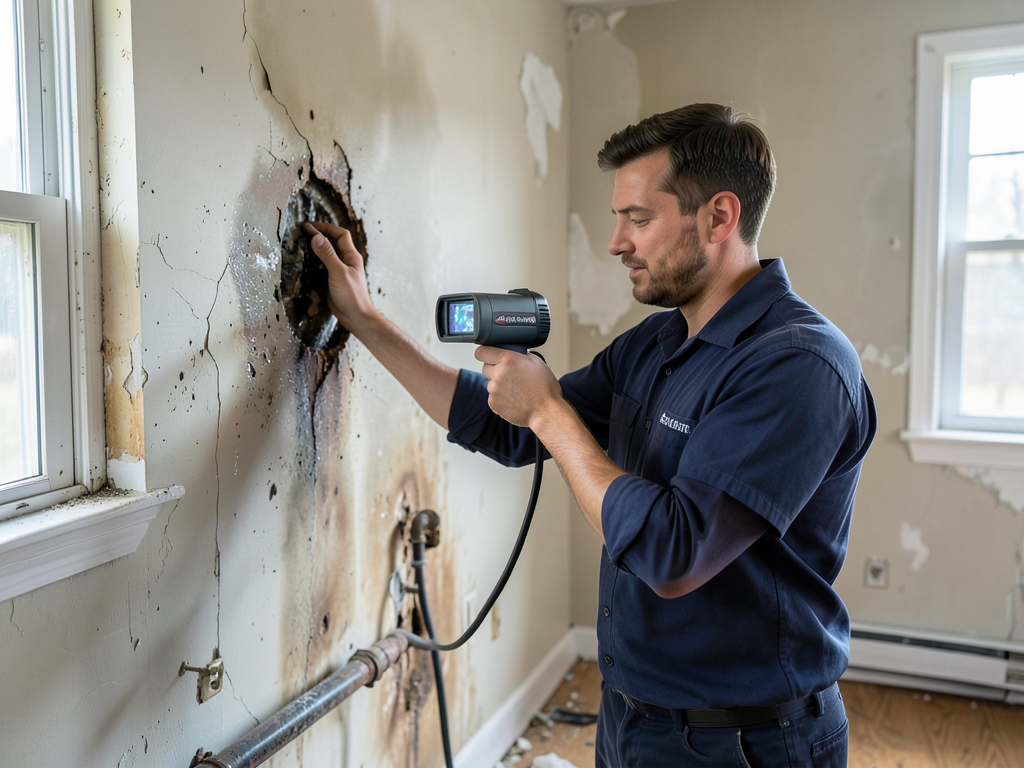
The arriving crew conducts a thorough inspection using moisture meters and thermal imaging cameras. They identify all affected areas, including hidden moisture in walls and under floors. This diagnostic process typically takes 30-60 minutes.
Water extraction begins immediately using truck-mounted or portable extraction units. These powerful vacuums remove standing water far more effectively than shop vacs or mops.
Moisture mapping follows extraction. Technicians use specialized meters to determine moisture levels in all materials. This mapping guides the drying strategy and equipment placement.
Drying equipment installation includes air movers, dehumidifiers, and sometimes specialized drying systems for hardwood floors or wall cavities. The equipment runs continuously for several days.
Daily monitoring ensures proper drying progress. Technicians adjust equipment placement and settings based on moisture readings. This monitoring continues until all materials reach acceptable moisture levels.
Cost-Saving Strategies
While professional restoration is often necessary, several strategies can help manage costs.
Act quickly. The longer water sits, the more damage occurs and the higher the restoration costs. A 24-hour delay can double restoration costs due to mold growth and material deterioration.
Document everything yourself. While professionals provide detailed documentation, your photos and videos can supplement their reports and potentially reduce documentation fees.
Consider partial DIY for clean water damage. If you’re comfortable with basic tools and the damage is minimal, you might handle initial water removal while hiring professionals for drying and moisture detection.
Ask about payment plans. Many restoration companies offer financing options for large projects. Some also work with third-party financing companies that specialize in home repairs.
Bundle services when possible. If you need both water damage restoration and related repairs, some companies offer package pricing that reduces the overall cost.
The True Cost of Waiting
Delaying professional water damage response often results in exponentially higher costs.
Within the first 24 hours, water spreads through porous materials and creates ideal conditions for mold growth. At this stage, restoration costs are typically at their lowest.
Between 24-48 hours, mold begins growing visibly. Materials start to warp, and odors develop. Restoration costs increase by 30-50% as more materials require replacement.
After 48-72 hours, extensive mold growth occurs. Structural elements may begin deteriorating. Restoration costs can triple as entire wall assemblies require removal and replacement.
Beyond 72 hours, the damage often becomes a major renovation project rather than a restoration. Costs escalate dramatically, and insurance companies may question why professional help wasn’t sought sooner.
Conclusion: Making the Right Choice
Water damage restoration costs in Buffalo vary widely based on damage extent, water type, and response time. While prices range from $1,200 to over $10,000, the average homeowner pays between $2,500 and $5,000 for professional restoration.
The key to managing these costs is quick action. Professional restoration companies can often prevent secondary damage that dramatically increases costs. Their expertise in water classification, drying science, and insurance documentation provides value beyond simple cleanup.
Buffalo’s unique climate and infrastructure create specific water damage risks. Understanding these local factors helps you prepare for potential issues and respond appropriately when they occur. Whether you’re dealing with a burst pipe during a polar vortex or a sump pump failure during spring thaw, professional restoration provides the expertise needed to return your home to pre-loss condition efficiently and safely.
Remember that the cheapest option isn’t always the most cost-effective. Quality restoration prevents future problems and ensures your home remains safe and healthy for your family. When water damage strikes, choose experience, certification, and rapid response over rock-bottom pricing.
Need Help Now?
Water damage waits for no one. If you’re facing a water emergency in Buffalo, don’t wait another minute. Call (716) 317-7717 for 24/7 emergency response. Our certified technicians arrive within 60 minutes, equipped to stop the damage and start the restoration process immediately. We work directly with your insurance company to make the process as smooth as possible.
Pick up the phone and call (716) 317-7717 before the next storm hits. Your home deserves expert care, and you deserve peace of mind knowing the job will be done right the first time.
{
“@context”: “https://schema.org”,
“@type”: “BlogPosting”,
“headline”: “How much does professional water damage restoration actually cost in Buffalo NY?”,
“description”: “Get transparent pricing for water damage restoration in Buffalo. Learn about cost factors, insurance coverage, and local considerations from experienced professionals.”,
“wordCount”: 2395,
“datePublished”: “2026-03-17T12:42:00.000Z”,
“dateModified”: “2026-03-17T12:42:00.000Z”,
“inLanguage”: “en-US”,
“mainEntityOfPage”: {
“@type”: “WebPage”,
“@id”: “https://alphawaterdamagerestorationbuffalo.com”
},
“publisher”: {
“@type”: “LocalBusiness”,
“name”: “Alpha Water Damage Restoration Buffalo”,
“url”: “https://alphawaterdamagerestorationbuffalo.com”
},
“author”: {
“@type”: “Organization”,
“name”: “Alpha Water Damage Restoration Buffalo”,
“url”: “https://alphawaterdamagerestorationbuffalo.com”
},
“image”: {
“@type”: “ImageObject”,
“url”: “https://alphawaterdamagerestorationbuffalo.com/wp-content/uploads/2026/03/how-much-does-professional-water-damage-restoratio-1.png”
}
}
{
“@context”: “https://schema.org”,
“@type”: “LocalBusiness”,
“name”: “Alpha Water Damage Restoration Buffalo”,
“url”: “https://alphawaterdamagerestorationbuffalo.com”,
“address”: {
“@type”: “PostalAddress”,
“addressLocality”: “Buffalo”
},
“areaServed”: {
“@type”: “City”,
“name”: “Buffalo”
}
}
{
“@context”: “https://schema.org”,
“@type”: “FAQPage”,
“mainEntity”: [
{
“@type”: “Question”,
“name”: “Does Insurance Cover Water Damage in Buffalo?”,
“acceptedAnswer”: {
“@type”: “Answer”,
“text”: “Insurance coverage varies significantly based on the water damage source. Understanding your policy helps you prepare for potential out-of-pocket costs. How to Handle Insurance Claims.”
}
},
{
“@type”: “Question”,
“name”: “How long does water damage restoration take?”,
“acceptedAnswer”: {
“@type”: “Answer”,
“text”: “Most water damage restoration projects in Buffalo take 3-5 days for drying alone. Complete restoration including repairs typically requires 2-3 weeks. Sewage backups or extensive flooding may extend this timeline.”
}
},
{
“@type”: “Question”,
“name”: “Can I stay in my home during restoration?”,
“acceptedAnswer”: {
“@type”: “Answer”,
“text”: “This depends on the damage extent and affected areas. If the damage is contained to one area, you might remain in your home. However, Category 3 water damage often requires evacuation due to contamination risks.”
}
},
{
“@type”: “Question”,
“name”: “Will my insurance rates increase after a claim?”,
“acceptedAnswer”: {
“@type”: “Answer”,
“text”: “Insurance companies evaluate claims differently. One water damage claim might not affect rates, but multiple claims within a short period could lead to increases or non-renewal. Discuss this with your insurance agent before filing.”
}
},
{
“@type”: “Question”,
“name”: “What should I do immediately after discovering water damage?”,
“acceptedAnswer”: {
“@type”: “Answer”,
“text”: “Safety first. Shut off electricity to affected areas if safe to do so. Stop the water source if possible. Document damage with photos for insurance. Contact a professional restoration company immediately. Every hour counts in preventing further damage.”
}
},
{
“@type”: “Question”,
“name”: “How do I know if water damage is covered by insurance?”,
“acceptedAnswer”: {
“@type”: “Answer”,
“text”: “Review your policy documents or contact your insurance agent. Generally, sudden and accidental damage from internal sources is covered, while flooding and maintenance-related issues require separate coverage. Professional restoration companies can help verify coverage during the initial assessment.”
}
},
{
“@type”: “Question”,
“name”: “Need Help Now?”,
“acceptedAnswer”: {
“@type”: “Answer”,
“text”: “Water damage waits for no one. If you’re facing a water emergency in Buffalo, don’t wait another minute. Call (716) 317-7717 for 24/7 emergency response. Our certified technicians arrive within 60 minutes, equipped to stop the damage and start the restoration process immediately. We work directly with your insurance company to make the process as smooth as possible.”
}
}
]
}
{
“@context”: “https://schema.org”,
“@type”: “BreadcrumbList”,
“itemListElement”: [
{
“@type”: “ListItem”,
“position”: 1,
“name”: “Home”,
“item”: “https://alphawaterdamagerestorationbuffalo.com”
},
{
“@type”: “ListItem”,
“position”: 2,
“name”: “Blog”,
“item”: “https://alphawaterdamagerestorationbuffalo.com/blog”
},
{
“@type”: “ListItem”,
“position”: 3,
“name”: “How much does professional water damage restoration actually cost in Buffalo NY?”
}
]
}
{
“@context”: “https://schema.org”,
“@type”: “Service”,
“serviceType”: “Water Damage Restoration”,
“provider”: {
“@type”: “LocalBusiness”,
“name”: “Alpha Water Damage Restoration Buffalo”,
“url”: “https://alphawaterdamagerestorationbuffalo.com”
},
“areaServed”: {
“@type”: “City”,
“name”: “Buffalo”
},
“description”: “Get transparent pricing for water damage restoration in Buffalo. Learn about cost factors, insurance coverage, and local considerations from experienced professionals.”
}